
Pacific wax myrtle
Myrica californica
Description
Sowing dates
Propagation of the Pacific wax myrtle is most often carried out by seeds, which require mandatory stratification to increase germination rates. The optimal time for sowing is early spring, immediately after the soil warms up.
To accelerate germination, seeds are soaked in water for 24 hours before planting in a substrate. Sowing is carried out in loose, well-drained soil mixtures at a depth of about one centimeter.
Vegetative propagation is also possible using cuttings, which are harvested at the end of summer from semi-hardwood shoots. Cuttings help preserve varietal traits and allow for faster production of mature seedlings.
When grown in nurseries, it is important to provide sufficient spacing for each plant, as the shrub develops a powerful root system.
Young seedlings require regular watering during the first year after planting until their roots adapt to the natural soil moisture conditions.
Growing requirements
Pacific wax myrtle belongs to the Myricaceae family and naturally grows along the Pacific coast of North America. It is a hardy plant adapted to coastal climates with high air humidity.
The crop prefers acidic or neutral soils with good aeration and drainage. It is capable of surviving in sandy areas due to symbiosis with nitrogen-fixing bacteria in its roots.
The plant is sun-loving but can tolerate light shade in regions with hot summers. It is important to protect young plants from strong cold winds in northern introduction zones.
The optimal temperature range for development is within a temperate climate. The myrtle does not tolerate prolonged drought well and requires stable soil moisture levels.
In agricultural practice, it is important to avoid soil compaction, as the root system is sensitive to a lack of oxygen in the root zone.
Yield
The economic value of the Pacific wax myrtle lies primarily in its ornamental qualities, as well as its ability to stabilize slopes and dunes due to its developed roots.
In landscaping, the crop is used to create hedges and windbreaks. It is valued for its dense evergreen foliage, which retains its decorative look throughout the year.
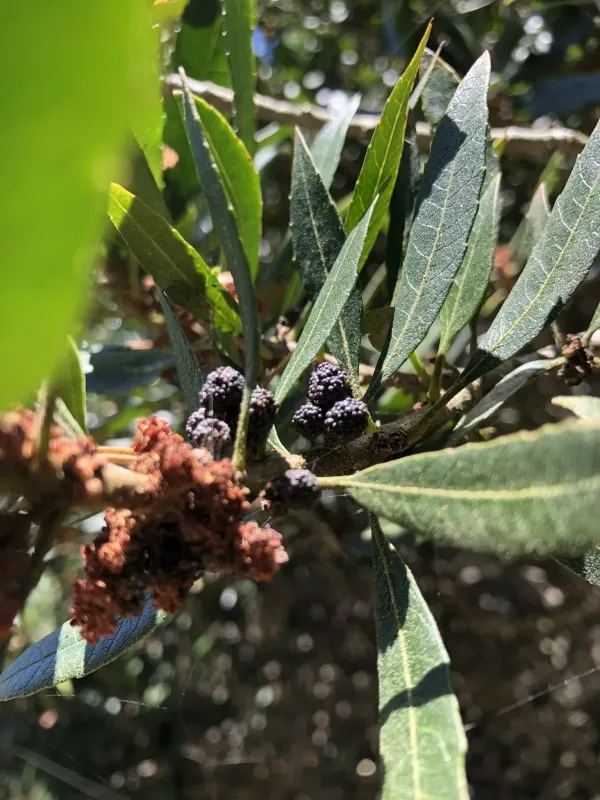
The fruits of the plant are small waxy drupes, which are not consumed as food but can be used for decorative purposes or in candle making.
Maximum biomass productivity is achieved when grown in conditions that most closely mimic its natural habitat: coastal zones with a mild climate.
Maintenance of the plantings includes sanitary pruning, which stimulates branching and gives the shrub a more compact and dense shape.
Main diseases and pests
The Pacific wax myrtle possesses high natural resistance to most common agricultural pests and pathogens.
The main threat to young plants can be fungal diseases that develop during excessive waterlogging at the roots.
In rare cases, aphid infestation is possible, which settles on young shoots during the period of active spring growth.
Disruption of soil aeration often leads to leaf chlorosis, related to nutrient uptake issues and deficiency of microelements from the soil.
Regular monitoring of foliage health and soil moisture control allow for the prevention of disease outbreaks and ensure the viability of the plantings.