
Myrica cordifolia
Myrica cordifolia
Description
Growing requirements
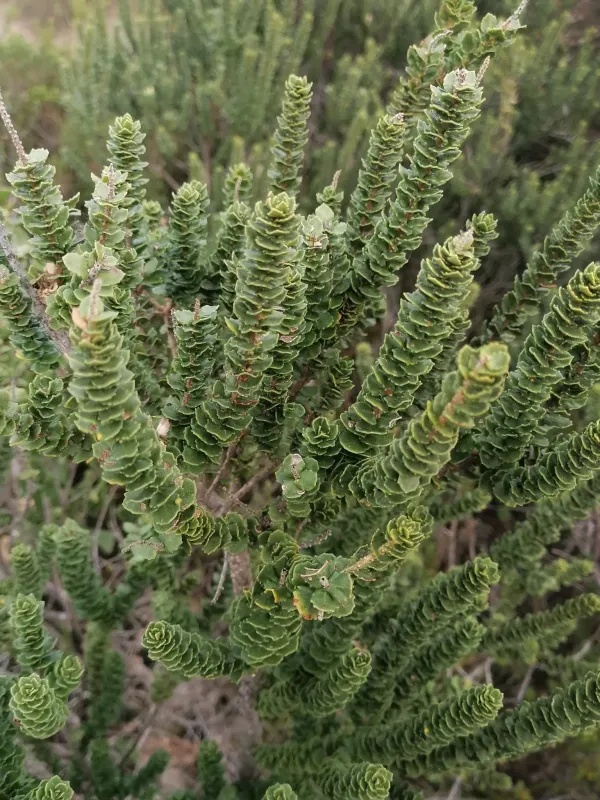
Myrica cordifolia, commonly known as the heart-leaved bayberry, is a member of the Myricaceae family. It is an evergreen shrub characterized by its robust, salt-tolerant nature.
Native to the coastal regions of Southern Africa, this plant is naturally adapted to survive in sandy environments and dunes where moisture retention is low and wind exposure is high.
The cultivation of this shrub requires well-drained, sandy soil. It thrives in full sunlight and has a remarkable ability to adapt to nutrient-poor substrates, partially due to nitrogen-fixing symbiosis.
Climatic requirements focus on mild conditions. While it is extremely hardy against maritime influences, it does not withstand severe frost, which limits its outdoor cultivation to temperate climate zones.
Agricultural management is relatively simple as the plant requires minimal fertilization and irrigation once established in a suitable soil environment.
Harvesting
The primary agricultural use of Myrica cordifolia is in soil stabilization. Its extensive root system prevents sand dune erosion, making it vital for coastal ecological restoration projects.
The berries produced by the shrub are covered in a layer of high-quality vegetable wax. This wax has been traditionally harvested for the production of candles and cosmetic products.
The harvesting process involves picking the berries and boiling them to separate the wax from the fruit matter, a method that has been used for centuries.
Beyond its industrial utility, the plant serves an aesthetic purpose in xeriscaping, providing greenery to areas where other ornamental plants would fail to survive.
Pest and disease monitoring is essential during the early stages of growth, although the species is generally resilient to most common agricultural threats due to its natural chemical composition.