
Chinese bayberry
Myrica rubra
Description
Growing requirements
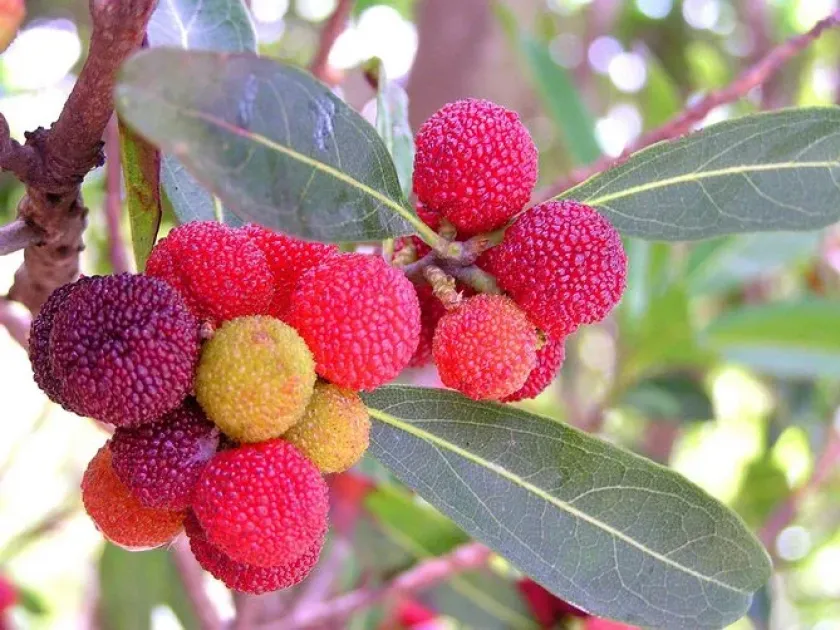
Chinese bayberry (Myrica rubra), commonly known as yumberry, is an evergreen tree belonging to the Myricaceae family. It is prized for its spherical, deep red fruits that have a unique sweet-tart flavor profile. The plant typically grows as a moderate-sized tree with dense, dark green foliage.
Native to East Asia, specifically China, this species thrives in humid subtropical climates. It is sensitive to extreme frost, requiring regions with mild winters for successful orchard establishment. The tree is often planted on hillsides to ensure good air circulation and water drainage.
The crop demands acidic soil with a pH range of 4.5 to 6.0. It is an acidophilic plant; therefore, planting in alkaline or neutral soil often leads to nutritional deficiencies, particularly iron chlorosis. Soil should be rich in organic matter to support healthy root development.
Agrotechnical management involves careful pruning to maintain an open canopy structure, which improves light penetration and facilitates harvesting. Irrigation must be managed precisely; while the plant loves humidity, it cannot tolerate waterlogged soils, which promote root rot.
In terms of economic use, the fruit is highly perishable and rarely shipped internationally in fresh form. It is widely processed into juices, canned fruits, dried snacks, and beverages. Due to its high antioxidant content, the fruit is increasingly recognized as a superfruit in global markets.
Yield
Mature Chinese bayberry trees are highly productive, with yields ranging from 40 to 80 kg per tree per season. Yield potential depends heavily on soil acidity levels and the specific variety, as improved cultivars demonstrate significantly higher fruit set and quality compared to wild-type trees.
Main diseases and pests
Major diseases include twig blight and various fungal leaf spot pathogens. These are most prevalent in high-humidity areas, necessitating careful canopy management and potential fungicide application during the pre-blooming stages to ensure tree health.
Common pests include fruit flies, which can damage ripening berries, and scale insects that infest stems. Integrated Pest Management (IPM) strategies, including the use of pheromone traps for fruit flies and biological control agents for scales, are recommended to minimize chemical usage.
Harvesting
Harvesting is labor-intensive because the berries are delicate and have no protective peel. Fruits are hand-picked at the peak of ripeness to ensure optimal sugar content. Post-harvest, fruits should be processed or stored at low temperatures to prevent rapid fermentation and spoilage.