
Northern bayberry
Myrica pensylvanica
Description
Sowing dates
Propagation of Northern bayberry is primarily achieved through seeds, although they require significant cold stratification to germinate successfully.
Seeds should be stratified at temperatures between 1°C and 5°C for approximately 60 to 90 days before planting in a loose, well-draining soil mix.
Vegetative propagation via softwood cuttings is a preferred commercial method to ensure genetic uniformity and faster establishment of shrub stands.
Cuttings should be taken in late summer, treated with rooting hormones, and placed in a high-humidity environment to encourage root development.
Transplanting container-grown nursery stock is recommended in early spring to allow the plant to establish roots before the onset of summer heat.
Growing requirements
Myrica pensylvanica is a deciduous, semi-evergreen shrub of the Myricaceae family, valued for its nitrogen-fixing capabilities in nutrient-poor soils.
The species thrives in full sun to partial shade and is highly tolerant of acidic, sandy, and infertile soil conditions where other crops fail.
It exhibits exceptional tolerance to coastal conditions, specifically salt spray and strong winds, making it a reliable plant for shoreline stabilization.
Moisture requirements are moderate once established, though the plant prefers consistently moist soil and performs best in organic-rich, acidic environments.
The shrub is naturally hardy and does not require extensive pruning unless used for shaping or maintaining specific height requirements in landscape design.
Main diseases and pests
Root rot is the most common threat, usually caused by poor drainage and excessive standing water during dormant or wet seasons.
Scale insects and aphids can sometimes infest the foliage, particularly on young or stressed plants in sheltered or poorly ventilated areas.
Leaf spot diseases may appear during seasons with prolonged humidity, requiring basic sanitation such as removing and destroying infected plant debris.
Environmental stress, particularly sudden winter thaws followed by freezes, can result in dieback of the youngest and most tender branches.
Integrated pest management should focus on maintaining shrub vigor, which prevents most infestations and provides natural resistance to minor pathogens.
Harvesting
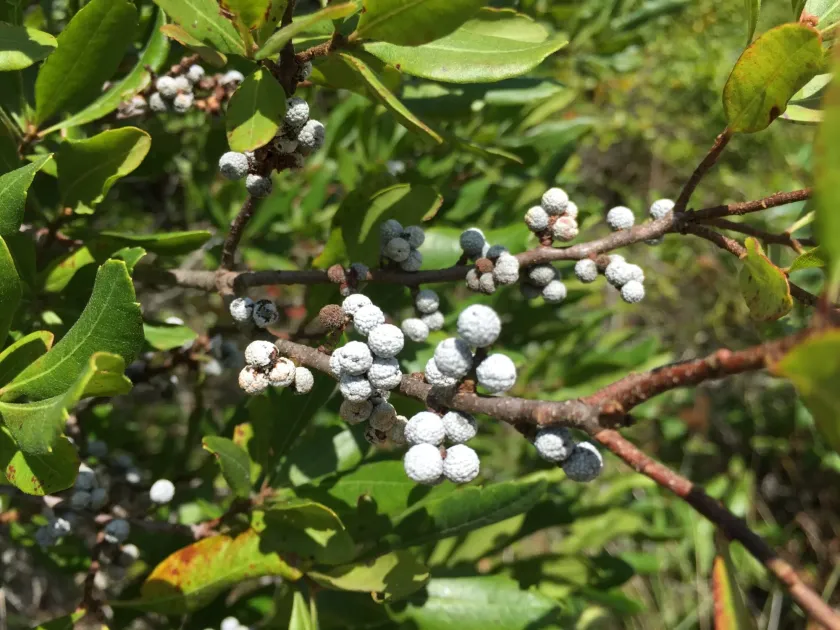
The primary harvest target is the grey, waxy fruit, which is hand-picked in late autumn after the waxy layer has fully developed on the drupes.
Wax is extracted by boiling the berries in water; as the water cools, the buoyant wax hardens on the surface for easy collection and purification.
The extracted wax is historically and commercially significant for creating high-quality, long-burning aromatic candles and artisanal soaps.
Harvesting should be done carefully to avoid damaging the woody branches, as the plant relies on these for structural integrity and future yields.
Beyond the fruit, the leaves are often collected for their pleasant fragrance and are used in culinary applications or as essential oil sources.