
Odorless bayberry
Myrica inodora
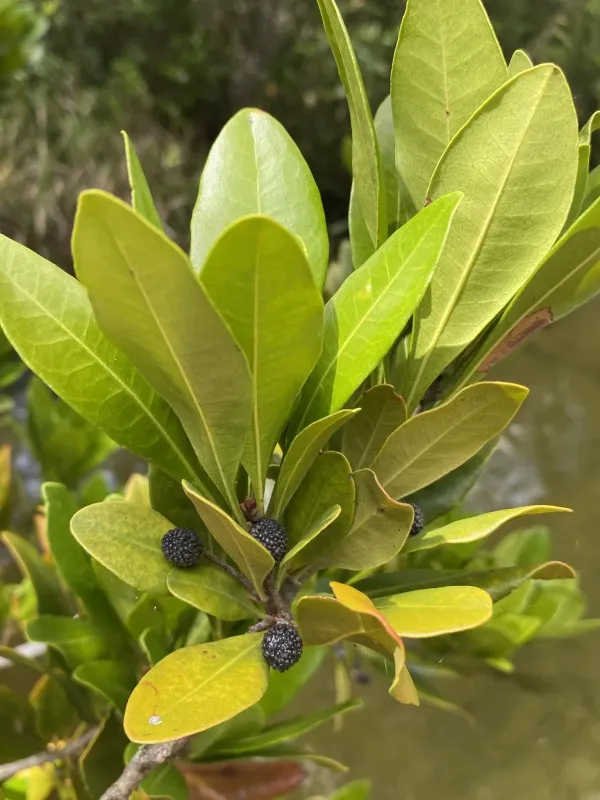
Description
Growing requirements
Odorless bayberry (Myrica inodora) belongs to the Myricaceae family. This evergreen shrub is native to the southeastern United States, particularly within Florida and Alabama, where it thrives in moist, sandy pine barrens and wetland habitats.
The plant is specifically adapted to wet environments and is often found in areas that experience seasonal flooding. It demonstrates significant tolerance for saturated soil conditions, which is a defining trait of its ecological niche.
Botanically, the species is identified by its leathery, lanceolate leaves. Unlike its common relatives in the Myrica genus, it lacks the aromatic glands on the foliage, which distinguishes it as the "odorless" variant within the group.
Successful growth of Myrica inodora requires acidic, nutrient-poor, yet well-moistened sandy soils. It is sensitive to rapid changes in pH and requires consistent soil moisture to maintain its vitality throughout the growing season.
In terms of usage, the plant is primarily valued for environmental conservation and restoration projects. Due to its specific growth requirements, it is rarely utilized as a traditional crop but serves as a key species in wetland ecosystem management.