
Fire tree
Myrica faya
Description
Growing requirements
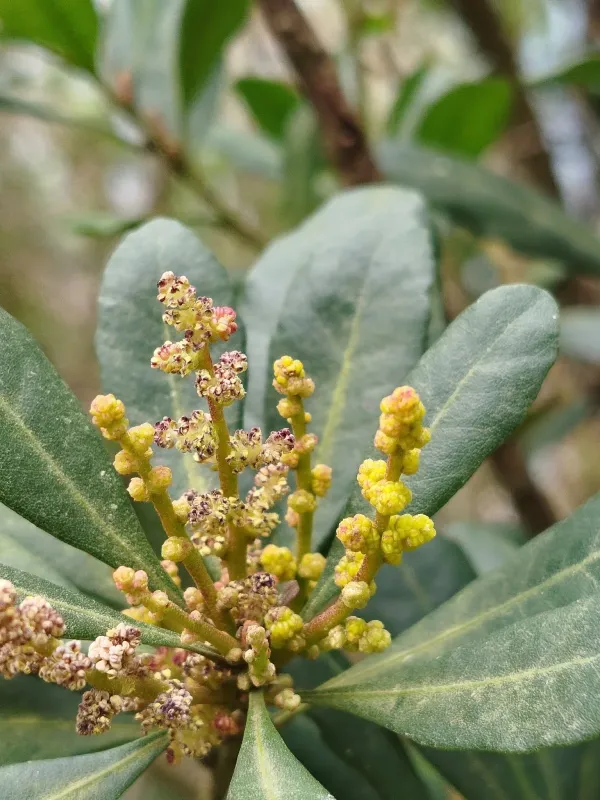
Myrica faya, commonly known as fire tree or candleberry, is a member of the Myricaceae family. This evergreen shrub or small tree is recognized for its significant role in ecological succession in its native range.
The species originates from the Macaronesian islands, including the Azores, Canary Islands, and Madeira. It thrives in maritime climates characterized by mild temperatures and regular rainfall.
A key biological trait of Myrica faya is its ability to fix atmospheric nitrogen through a symbiotic relationship with Frankia actinobacteria, which reside in specialized nodules on its roots.
It prefers well-drained volcanic or sandy soils with a slightly acidic to neutral pH. While it is tolerant of various light conditions, full sun exposure generally promotes denser canopy development and higher fruit production.
Economically, the tree provides wood suitable for fuel and small-scale timber works, while its berries serve as a food source for local bird populations and have historical uses in local culinary traditions.
Main diseases and pests
Fire tree is highly resistant to most environmental stressors within its native range. However, it is sensitive to severe waterlogging, which can compromise the root system and lead to secondary infections.
Fungal leaf spot diseases may appear in dense, unmanaged stands with poor air circulation, particularly during prolonged periods of high humidity and warm temperatures.
Insect pests include various aphids and leaf-eating beetles that can cause cosmetic damage to young foliage, though they rarely threaten the survival of mature, well-established specimens.
As an invasive species in certain volcanic island environments, it is often subject to strict management programs intended to reduce its spread into sensitive ecological habitats.
Effective management includes mechanical clearing and the prevention of seed dispersal by local wildlife, as the plant is highly prolific and can quickly dominate open landscapes if left unchecked.