
Myoporum tenuifolium
Myoporum tenuifolium
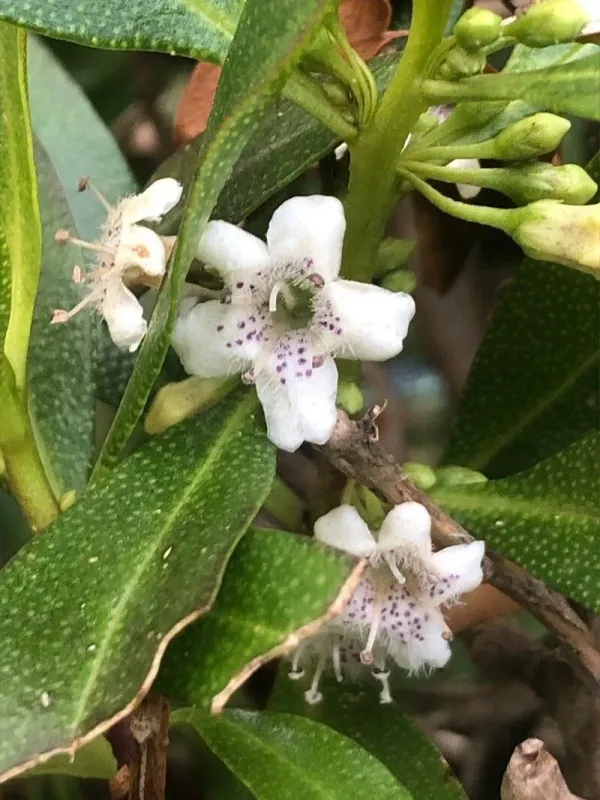
Description
Growing requirements
Myoporum tenuifolium is an evergreen shrub belonging to the Scrophulariaceae family. Native to Australia, it is well-regarded for its adaptability to harsh coastal conditions, including salt spray and nutrient-poor, sandy soil environments.
The plant thrives in full sun exposure. It is highly valued for its drought tolerance, making it an excellent choice for xeriscaping or areas where water resources for irrigation are limited or costly to maintain.
Botanically, this shrub features slender, lance-shaped leaves and dense branches. It produces small, white, or occasionally pale pinkish flowers followed by tiny, fleshy fruits. Its compact structure makes it versatile for various landscape applications.
Regarding soil requirements, the plant prefers well-drained substrates. While it tolerates various soil types, poor drainage can quickly become a limiting factor, potentially causing root system decline in wetter climates.
The primary use of this species is ornamental and functional landscaping. It is frequently employed to form dense privacy screens, windbreaks, and soil stabilization covers on embankments and coastal slopes where erosion control is necessary.
Main diseases and pests
The most significant threats to Myoporum tenuifolium are root and crown rots caused by fungal pathogens like Phytophthora. These are almost exclusively linked to poor drainage or overwatering, necessitating strict soil moisture control.
Pests such as scale insects and mealybugs are commonly found on the foliage. These pests suck the sap, leading to stunted growth and leaf discoloration. Early detection is crucial for maintaining plant vigor.
Powdery mildew may occur in poorly ventilated areas where humidity levels remain consistently high. This is typically managed through proper spacing during planting and strategic pruning to improve air circulation.
Control methods involve the use of systemic insecticides for sucking insects and appropriate fungicides if fungal outbreaks occur. Always follow local agricultural guidelines for product application rates.
Regular maintenance, including the removal of dead or crossing branches, is essential. This practice reduces the risk of disease and ensures the plant remains in a healthy, aesthetically pleasing condition throughout the year.