
Myoporum bontioides
Myoporum bontioides
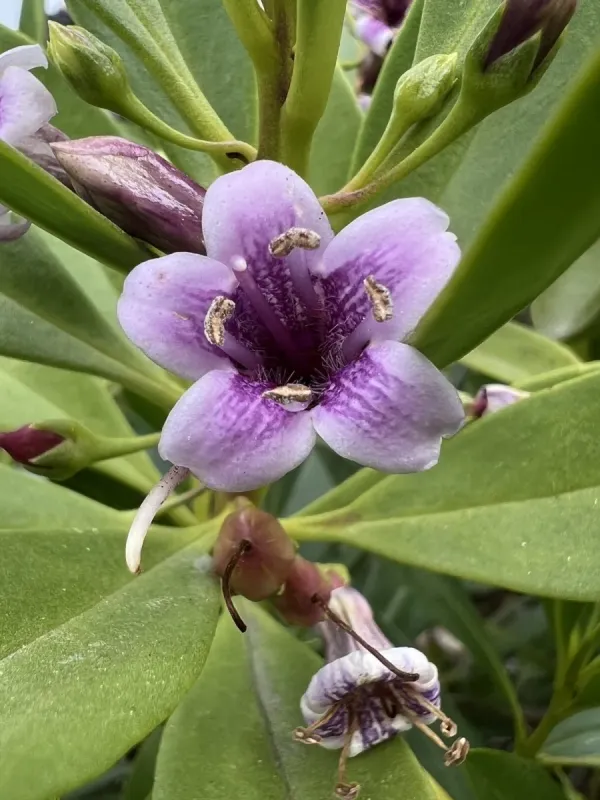
Description
Growing requirements
Myoporum bontioides is an evergreen shrub or small tree belonging to the Scrophulariaceae family. This species is widely recognized for its high tolerance to saline environments, naturally occurring in coastal marshlands and along tropical to subtropical seashores.
The plant exhibits unique physiological adaptations, specifically the presence of salt-excreting glands on its leaves. This mechanism allows it to thrive in habitats where salinity levels would be lethal to most other agricultural or ornamental crops.
Climatic requirements focus on warmth and high light intensity. It is best suited for coastal regions where it can benefit from ample sunlight and moderate air humidity, which are essential for maintaining its dense and lush foliage throughout the year.
Regarding soil conditions, Myoporum bontioides thrives in sandy or well-drained loamy substrates. Although it is moisture-loving and adapted to coastal environments, it requires effective soil drainage to prevent root asphyxiation during waterlogged conditions.
In terms of хозяйственное (landscaping) use, it serves as an excellent hedge plant and a soil stabilizer for dunes and embankments. Its structural resilience to strong winds makes it a valuable species for ecological restoration in maritime zones.
Main diseases and pests
The primary threats to the health of Myoporum bontioides include fungal infections such as leaf spots, which typically develop during prolonged periods of high humidity and poor airflow around the canopy.
Scale insects and mealybugs represent the most significant pest pressure, often infesting young stems and leaves. If left untreated, these pests can severely sap the plant's energy and lead to stunted growth.
Root rot, primarily caused by Phytophthora species, is a common issue in poorly drained soils or in environments where the root zone is chronically oversaturated, ultimately leading to plant collapse.
Aphid infestations may occur during the spring flush of new growth, requiring careful monitoring. While usually not fatal, heavy aphid populations can attract secondary issues like sooty mold.
Integrated pest management, including pruning for airflow and monitoring soil moisture, is the most effective approach for ensuring the longevity and aesthetic value of Myoporum plantings.