
Scarlet monkeyflower
Mimulus cardinalis Douglas ex Benth.
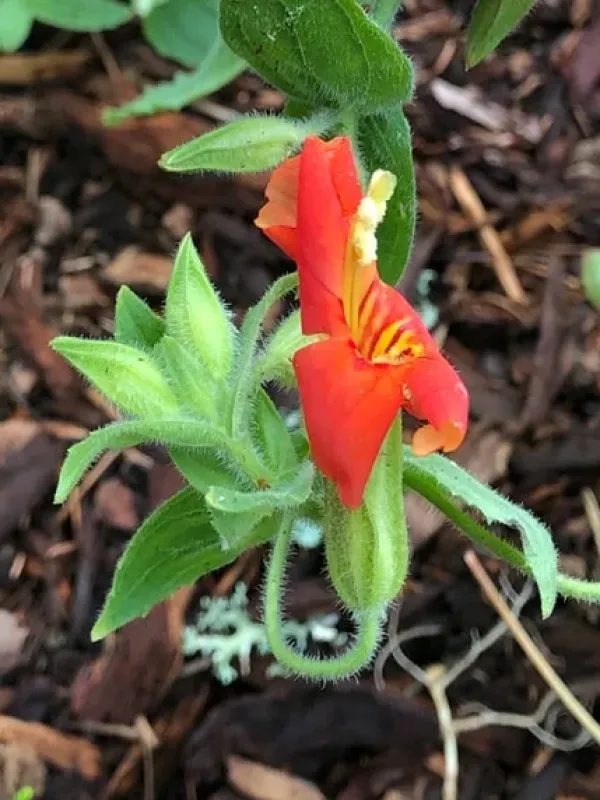
Description
Sowing dates
The seeds of Scarlet monkeyflower are extremely small and require careful handling during the sowing process. They should be sown on the surface of pre-moistened seed-starting mix in late winter or early spring.
Light is essential for the germination of Mimulus cardinalis seeds, so they should not be covered with soil. The containers should be covered with clear plastic to maintain humidity levels.
Germination usually takes about two to three weeks under optimal temperatures of 18–20 degrees Celsius. Once seedlings are large enough to handle, they are pricked out into individual small pots.
Hardening off the seedlings is a crucial step before transplanting them into the garden. This process involves gradually exposing the plants to outdoor conditions over a week to prevent transplant shock.
Transplanting into the permanent location in the garden should occur after the danger of frost has passed, ensuring the soil is well-prepared and rich in organic matter.
Growing requirements
Belonging to the Phrymaceae family, the Scarlet monkeyflower is a perennial that thrives in wet habitats. It is naturally found along streams, seeps, and damp meadows across western North America.
The plant demands consistently moist soil. In garden settings, it requires frequent watering, especially during the summer heat, as drying out is highly detrimental to its health.
It prefers fertile, well-draining soil with a slightly acidic to neutral pH. Incorporating compost or well-rotted manure during planting improves structure and nutrient availability.
While it prefers full sun in cooler climates, it benefits from partial shade in areas with intense afternoon heat to prevent the foliage from scorching and to maintain soil moisture.
Fertilization with a balanced, water-soluble fertilizer every two weeks during the active growing season will promote vigorous plant development and abundant floral displays.
Main diseases and pests
Powdery mildew is the most frequent disease affecting this species. It appears as white, dusty spots on leaves and stems, thriving in stagnant, humid environments with poor airflow.
Aphids can cause significant stress by feeding on new growth. Their activity often leads to stunted development and can facilitate the transmission of viral diseases among garden plants.
Slugs and snails may consume the succulent leaves of the plant, especially in the damp conditions that the Scarlet monkeyflower prefers. Protective barriers or traps can be employed.
Root rot is often the result of waterlogged soil combined with poor drainage. Once established, this condition is difficult to treat, making prevention through good soil management essential.
Maintaining a clean garden environment by removing dead plant debris helps reduce the population of pests and the spread of pathogens throughout the planting bed.