
Merremia hirta
Merremia hirta
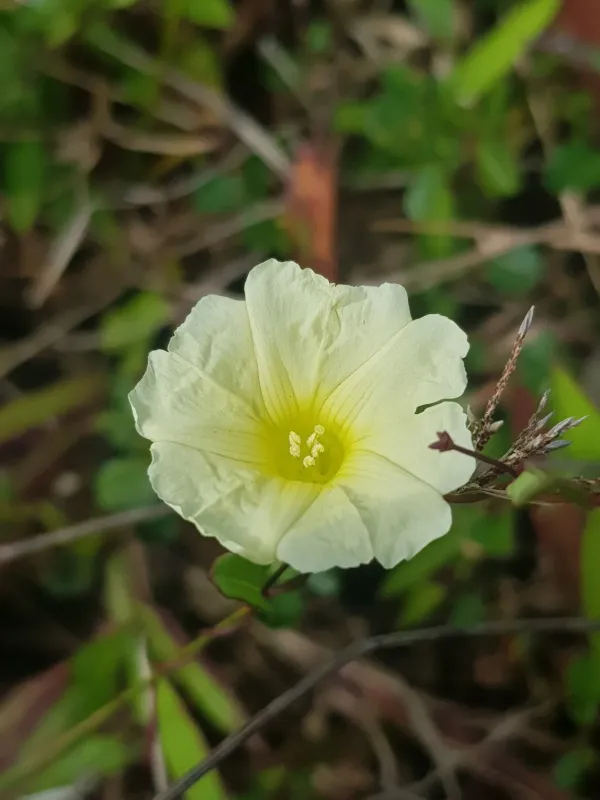
Description
Sowing dates
Merremia hirta is a climbing herbaceous plant belonging to the Convolvulaceae family. Naturally occurring in tropical environments, it spreads primarily through seeds dispersed by water or wind, demonstrating high resilience in colonizing suitable ecological niches.
In agricultural practice, sowing is conducted once soil temperatures reliably reach 20–25 degrees Celsius. Spring is generally preferred for planting, aligning with the end of the rainy season to ensure that moisture is sufficient but not excessive during the germination phase.
Professional cultivation benefits from seed scarification, which enhances germination rates. Seeds should be planted at a shallow depth of 1–2 centimeters, ensuring they receive enough warmth and soil contact to break dormancy effectively within the first few weeks.
As a climbing species, Merremia hirta requires structural support for optimal growth. Providing trellises or vertical framing allows the plant to develop its full foliage capacity, prevents soil-borne diseases, and ensures proper aeration of the stems.
Vegetative propagation via stem cuttings is also a viable method for rapid biomass production. This technique is often preferred in commercial settings to ensure genetic uniformity and to shorten the time required for the plant to reach its harvestable development stage.
Growing requirements
This species is strictly thermophilic, demanding consistent temperatures between 22 and 30 degrees Celsius. It is highly sensitive to cold, and growth will stall or cease if temperatures drop below 15 degrees Celsius, making it unsuitable for temperate climates without controlled environments.
For best results, it requires well-drained, fertile soil, typically loamy or sandy. Poor drainage is a significant limiting factor, as stagnant water quickly leads to root rot, which is a common vulnerability among many Convolvulaceae species.
Abundant sunlight is crucial for the development of Merremia hirta. Locations with full sun exposure encourage higher concentrations of secondary metabolites and promote vigorous growth, whereas shade results in leggy, weak stems and reduced overall biomass yields.
Watering regimes should be kept moderate. While the plant requires hydration during drought, avoid waterlogging the soil. A balanced moisture approach mimics the plant's native tropical habitat and supports its physiological health throughout the growing season.
Nutrient management involves applying balanced fertilizers, emphasizing nitrogen during the vegetative phase and potassium during the maturation phase. Proper mineral balance reinforces stem strength and enhances the plant's ability to resist environmental stressors.
Yield
The primary agricultural interest in Merremia hirta lies in its biomass production. The plant is utilized in traditional medicine and as supplementary forage for livestock in certain regions, valued for its specific chemical profile and ease of cultivation.
Yield efficiency is directly linked to adherence to proper agronomic practices and favorable climatic conditions. When cultivated in optimal conditions, the plant produces substantial vegetative mass suitable for both fresh use and drying for downstream processing.
Rich in flavonoids and various bioactive compounds, the plant serves as a raw material for botanical research and pharmaceutical preparations. Harvesting is timed to coincide with the peak concentration of these compounds in the stem and leaf tissues.
Future production potential relies on selecting high-yield varieties and implementing effective crop rotation strategies. Ensuring the soil is properly rested after each harvest cycle helps maintain the nutrient levels necessary for subsequent crops.
Strategic management of harvest density and timing allows producers to maximize returns while maintaining plant health. Implementing mechanized harvesting where possible can significantly increase the productivity and economic viability of Merremia hirta cultivation.
Main diseases and pests
Fungal diseases, including powdery mildew and various forms of root rot, represent the most significant threats to Merremia hirta. These issues are frequently triggered by high humidity levels and poor airflow, which create an environment conducive to pathogen spread.
Pests such as aphids and spider mites are common concerns. They typically target young, succulent growth, causing deformation and physiological stress. These pests can rapidly colonize a plantation, leading to significant yield losses if not detected and addressed early.
Integrated pest management (IPM) is the recommended approach for this culture. Utilizing biological control agents or targeted, low-toxicity botanical insecticides can effectively manage pest populations while preserving the safety of the final product for pharmaceutical or feed use.
Preventive measures include maintaining proper spacing between plants to ensure good air circulation and conducting regular health inspections. Removing diseased or infested plants promptly is essential to prevent the spread of infections throughout the cultivation area.
Chemical intervention should be considered a last resort and must strictly follow local regulations. Monitoring for residues is vital to ensure that the biomass produced remains safe for its intended applications, particularly when used in medical or feed contexts.