
Merremia gemella
Merremia gemella
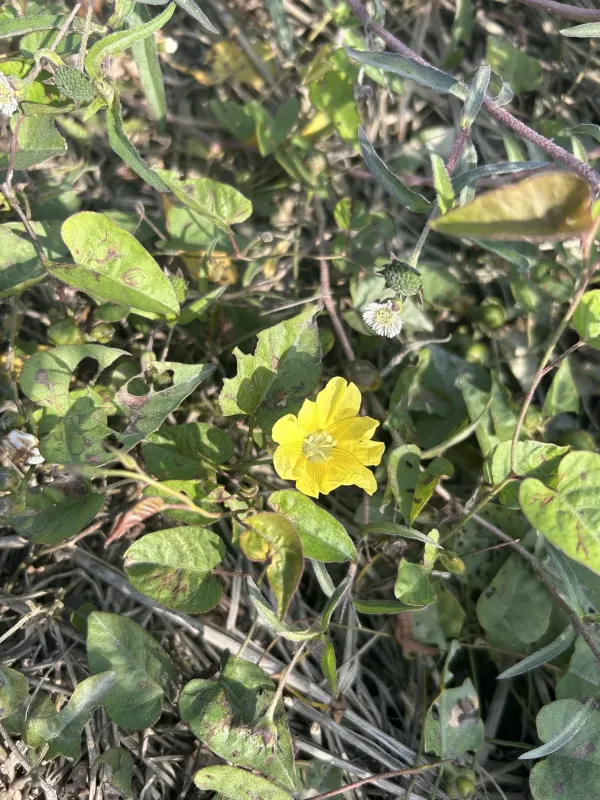
Description
Sowing dates
Sowing of Merremia gemella is best performed at the onset of the wet season when soil moisture levels are consistently high. The seeds require warmth and stable humidity to ensure uniform and rapid germination.
The optimal planting depth is approximately 1-2 centimeters. Covering the seeds with a light layer of soil protects them from direct solar radiation while allowing adequate aeration for the emerging radicle.
Seed spacing should be managed to accommodate the sprawling vine nature of the plant, allowing sufficient lateral growth without inducing severe competition for soil nutrients between individual specimens.
Germination typically occurs within 7 to 14 days, depending on soil temperature. Once the seedlings reach the four-leaf stage, they become significantly more robust and ready for transplanting or thinning in the main growing field.
Good soil preparation prior to sowing, including the removal of competitive weeds, is essential to ensure the young plants are not overwhelmed during their early, delicate stage of development.
Growing requirements
Merremia gemella is a member of the Convolvulaceae family, recognized for its vigorous climbing or trailing growth habit. It is naturally adapted to tropical regions where high temperatures and regular rainfall are standard.
The crop thrives in full sun conditions, as light intensity is a direct driver of its photosynthesis and biomass production. It is poorly suited for shaded environments where its growth rate diminishes rapidly.
In terms of soil preference, it requires well-drained ground, ideally with a neutral to slightly acidic pH. While it is adaptable to various soil textures, it shows optimal performance in nutrient-rich alluvial soils.
Climate requirements include a consistent temperature range between 25 and 30 degrees Celsius. Exposure to cold, particularly temperatures below 15 degrees Celsius, can induce dormancy or necrosis in sensitive tissues.
Water management is critical; while the plant is tolerant of short periods of fluctuation, persistent drought stress limits vine elongation. Adequate irrigation during the peak growth phase is necessary for maximum yields.
Yield
The yield of Merremia gemella is primarily evaluated in terms of vegetative biomass, which serves as a valuable resource in tropical agricultural systems. Its rapid growth allows for multiple harvests throughout the growing season.
Fresh matter production is significantly enhanced by nitrogen-rich fertilisation, which supports the intensive development of stems and leaves. Proper timing of the harvest is essential to balance quantity with the quality of the foliage.
Depending on the cultivation intensity, yields can be maximized by implementing a cut-and-carry system, which encourages the plant to regenerate from the nodes after the primary harvest.
Environmental factors such as photoperiod and moisture availability directly impact the final yield metrics. Under optimal management, the plant demonstrates a high capacity for recurring biomass accumulation.
The nutritional profile of the harvested biomass makes it a notable candidate for local forage use, though it must be monitored for compatibility with specific livestock digestive systems.
Main diseases and pests
Fungal infections, particularly those resulting from high humidity and poor circulation, represent a major threat. Root rot can occur if soil drainage is compromised by excessive or prolonged rain.
Leaf-eating insects are the most common pests, as the large surface area of the leaves makes them attractive targets. Damage can scale quickly, leading to secondary vulnerability to environmental stressors.
Aphids and whiteflies often target the soft, succulent tips of the vines. These pests can extract significant amounts of nutrients and potentially transmit mosaic-type viruses common in the Convolvulaceae family.
Integrated pest management strategies are recommended, focusing on early detection and the use of mechanical removal methods where possible to avoid the accumulation of chemical residues.
Maintaining clear boundaries between the crop and adjacent wild vegetation is an effective way to minimize the pressure from generalist pest populations migrating into the cultivated area.