
Merremia distillatoria
Merremia distillatoria
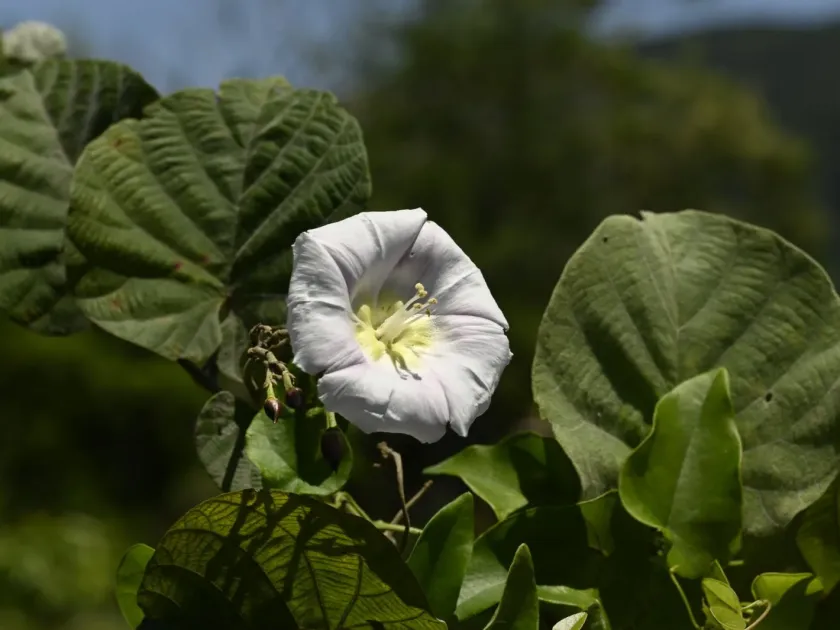
Description
Sowing dates
Merremia distillatoria, a member of the Convolvulaceae family, is a tropical vine that requires specific propagation techniques to ensure successful establishment. Seed preparation includes scarification to break the seed coat dormancy.
Sowing should take place when soil temperatures consistently reach +22...+25 degrees Celsius. In its native habitat, growth initiates with the onset of the wet season and rising day lengths.
Soaking seeds in warm water for 12–24 hours prior to planting significantly improves germination rates. Seeds should be planted at a depth of 1–1.5 cm in a loose, well-draining substrate.
Seedlings should be handled with care during the transplanting phase, as the root system is sensitive to disturbance. Using biodegradable pots is highly recommended to minimize root shock.
Transitioning the plants to a permanent location must occur only after all risks of frost have passed. Providing sufficient space for the vines to climb is essential for healthy development.
Growing requirements
This species thrives in locations with bright, indirect sunlight. While it appreciates high light levels, exposure to harsh midday sun should be avoided to prevent foliar scorch.
Well-drained, nutrient-rich soil is paramount for the cultivation of Merremia distillatoria. The plant prefers a neutral to slightly acidic pH range to maximize nutrient uptake.
Stable, warm temperatures are crucial for growth, ideally between +25 and +30 degrees Celsius. Sudden drops in temperature can cause significant physiological stress to the vine.
Maintaining high relative humidity is vital, particularly in greenhouse settings. Regular misting or automated irrigation helps keep the foliage lush and prevents edges from drying out.
Robust vertical support structures are mandatory for this climbing plant. Without suitable structures, the vines will become tangled on the ground, reducing air circulation and vigor.
Main diseases and pests
Spider mites are a common pest, particularly in environments with low humidity and poor ventilation, which can lead to significant damage on the foliage.
Fungal issues, such as powdery mildew, often arise when plants are grown in overcrowded conditions or when there is insufficient airflow between the leaves.
Root rot is the most serious threat, usually caused by overwatering or poor soil drainage. Once rot sets in, the entire plant structure can quickly collapse.
Effective pest management relies on early detection and maintaining proper environmental conditions to keep the plants resistant to pathogens.
- Monitor foliage regularly for early signs of infestation.
- Ensure adequate spacing to allow for constant air movement.
- Avoid overhead watering during humid, cool evenings to reduce mildew risk.