
Menziesia purpurea
Menziesia purpurea
Description
Growing requirements
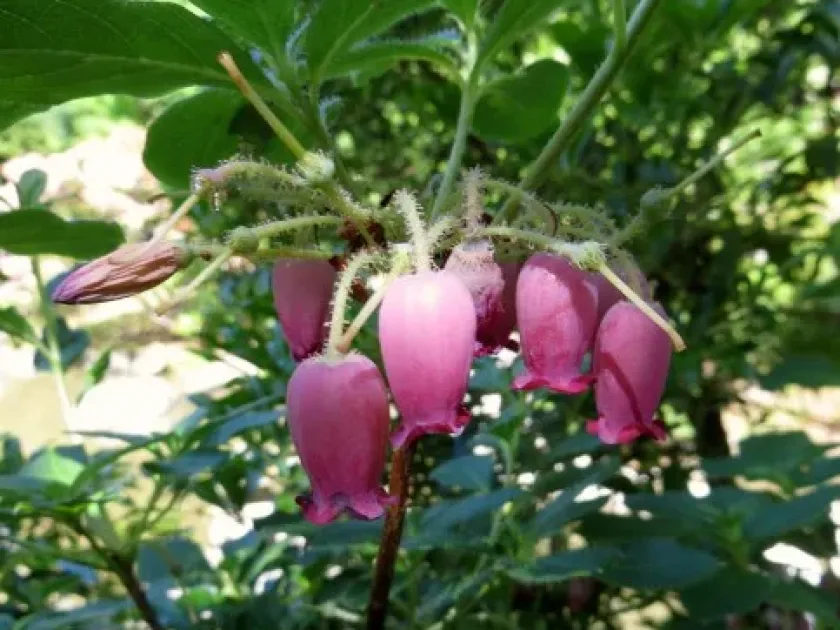
Menziesia purpurea is a deciduous shrub belonging to the Ericaceae family. Known for its distinct bell-shaped flowers and attractive foliage, it is a prized specimen for temperate gardens.
Native to the mountain regions of Japan, this shrub thrives in cool, humid environments. It typically grows in forest understories, where it is protected from extreme weather conditions and receives filtered sunlight.
For successful cultivation, plant Menziesia purpurea in partial shade. Excessive exposure to direct sunlight can stress the plant, causing leaf scorch and reduced flowering capacity during the growing season.
The plant requires acidic soil conditions with a pH range of 4.5 to 5.5. A well-draining medium, enriched with organic matter such as peat moss, pine needles, or leaf mold, is essential for healthy growth.
Watering must be consistent to keep the root system moist but never waterlogged. Applying a layer of organic mulch around the base helps retain soil moisture and maintains the required acidic pH levels throughout the year.
Main diseases and pests
Root rot caused by Phytophthora species is one of the most serious threats. It is usually triggered by poor soil drainage and waterlogging, making proper site selection and soil amendment critical.
Powdery mildew can affect the foliage during periods of high humidity and poor air circulation. Ensuring sufficient spacing between plants helps maintain a healthy airflow, significantly reducing the likelihood of fungal outbreaks.
Spider mites are common pests that thrive in hot and dry conditions. They colonize the underside of leaves, causing discoloration and eventual defoliation if left untreated during the summer months.
Scale insects can attach to branches and twigs, weakening the plant by draining its sap. Manual removal or application of dormant oils can effectively manage localized infestations in smaller garden settings.
Maintaining plant vigor through balanced fertilization and proper moisture management remains the best defense against pests and diseases. Early intervention with suitable fungicides and acaricides is recommended for severe cases.