
Rusty menziesia
Menziesia ferruginea
Description
Growing requirements
Rusty menziesia (Menziesia ferruginea) is a deciduous shrub belonging to the Ericaceae family. Native to the Pacific Northwest of North America, it is commonly found in forested areas and mountain slopes where it thrives under the canopy of larger trees.
This species requires specific environmental conditions to prosper, primarily favoring moist, well-drained, acidic soils. Gardeners attempting to cultivate this shrub must ensure the soil remains consistently damp, as it lacks drought tolerance, which is typical for many members of the heather family.
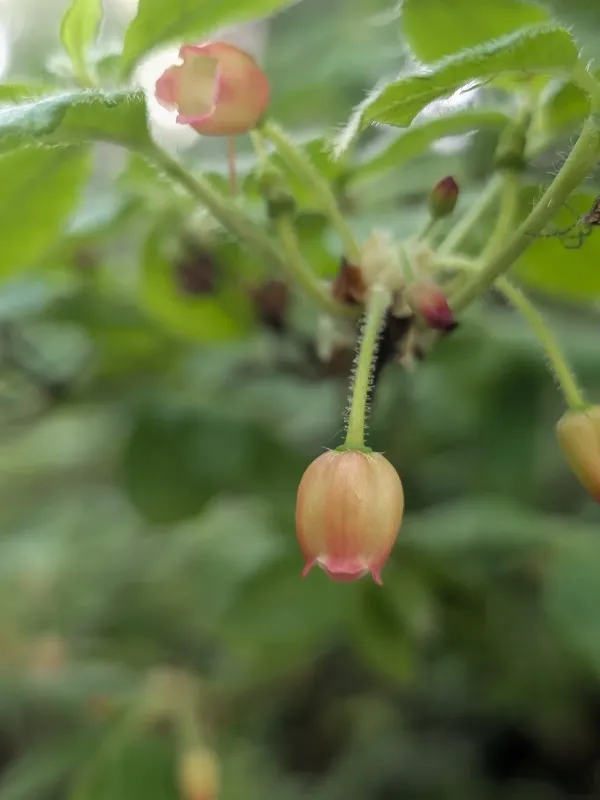
Botanically, the plant is characterized by its slender, erect stems and alternate, obovate leaves. The foliage is covered with rust-colored hairs, which provides the distinctive appearance giving the plant its common name. The growth habit is generally loose and spreading.
The flowering period occurs in late spring to early summer. The blossoms are small, bell-shaped, and hang in clusters, often featuring a subtle blend of yellow, green, and rusty-red hues. These flowers provide an elegant, understated aesthetic suitable for woodland gardens.
In terms of agricultural and horticultural use, Rusty menziesia is classified strictly as an ornamental plant. It is highly valued by enthusiasts of native landscaping and specialists who maintain ericaceous collections, as it adds structural diversity to shade-oriented garden designs.
Main diseases and pests
The most significant threats to Rusty menziesia involve soil-borne fungal pathogens, particularly Phytophthora species, which thrive in waterlogged conditions. Preventing water accumulation around the root crown is essential for long-term survival of the shrub.
Pest issues include typical ornamental threats such as spider mites and scale insects. Maintaining proper spacing for airflow and monitoring soil acidity levels are the primary cultural practices used to prevent infestations and maintain plant vigor.