
Memecylon oleifolium
Memecylon oleifolium
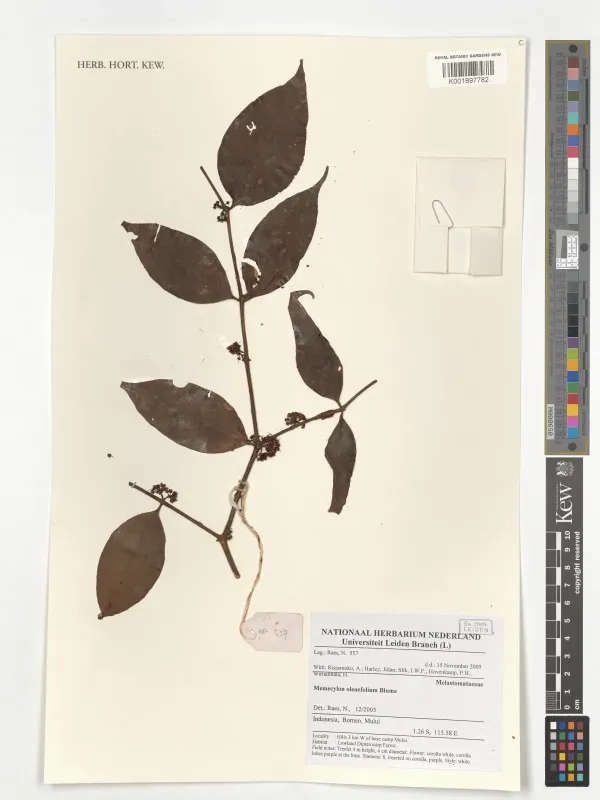
Description
Growing requirements
Memecylon oleifolium is a perennial tropical shrub or small tree member of the Melastomataceae family. It is known for its distinct, olive-like leathery leaves and compact growth structure typical of the tropical forest understory.
The species is native to tropical environments where rainfall is consistent and temperatures remain stable throughout the year. It thrives in humid conditions and requires a specialized microclimate to sustain its metabolic functions.
Agrotechnical success depends on providing well-draining, nutrient-rich soil with slightly acidic to neutral pH. Avoiding waterlogging is essential, as the root systems of this family are highly susceptible to oxygen deprivation in saturated substrates.
Light management is crucial, as the plant naturally occupies mid-canopy or understory positions. Exposure to intense, direct sunlight often causes chlorosis and tissue necrosis in leaves, necessitating filtered light systems.
Economic and utility applications include the use of its fine-grained timber for small woodworking projects and potential ornamental use in tropical botanical collections. Ongoing research evaluates its chemical constituents for bio-medical applications.
Main diseases and pests
The primary threats to Memecylon oleifolium include fungal pathogens such as Pythium and Phytophthora, which typically emerge under conditions of improper substrate management and poor ventilation.
Common insect pests include scale insects (Coccoidea) and mealybugs. These organisms congregate on the undersides of leaves and along stems, feeding on plant sap and reducing the plant's overall vigor.
Root-knot nematodes present a hidden threat in field cultivation. They disrupt nutrient uptake efficiency, leading to visible stunted growth and yellowing of the foliage, particularly in younger, more vulnerable plants.
Leaf spot diseases, caused by various fungal and bacterial pathogens, can proliferate in high-humidity greenhouses if hygiene protocols are neglected. Maintaining clean tools and sterile growing media is vital.
Integrated pest management (IPM) is highly recommended for this crop. Utilizing natural predators and periodic sanitation helps maintain plant health without causing environmental stress or chemical damage to delicate tropical tissues.