
Mariscus rehmannianus
Mariscus rehmannianus
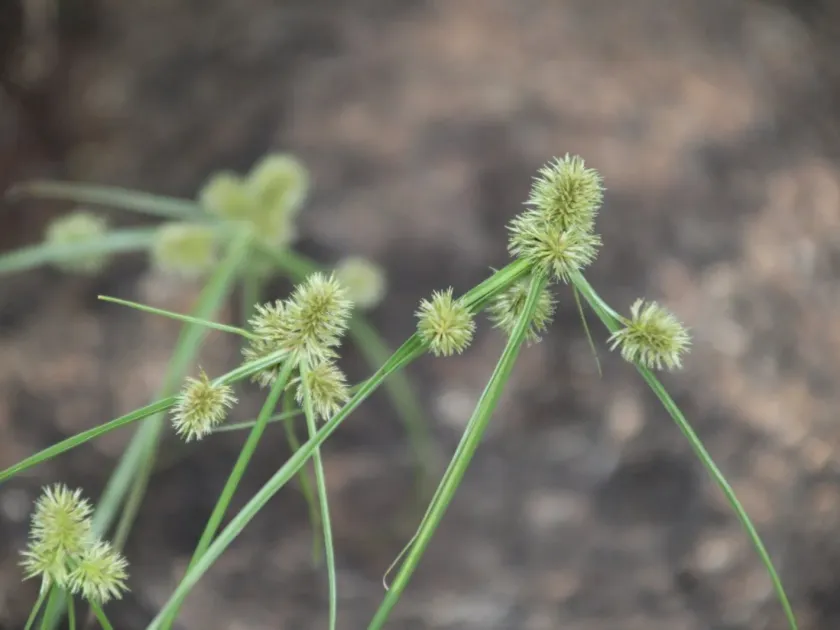
Description
Sowing dates
Mariscus rehmannianus belongs to the Cyperaceae family. It is a perennial herbaceous plant characterized by a robust root system, allowing it to adapt to various environmental conditions within its native range.
Cultivation starts with careful site preparation. Soil must be tilled to a fine tilth to ensure that the small seeds have adequate contact with the ground for efficient moisture absorption during germination.
The optimal sowing time is during the spring season when soil temperatures remain consistently above 15 degrees Celsius. Sowing in rows helps in maintaining a uniform plant density across the field.
Seed depth should not exceed 2 centimeters to ensure the seedlings can reach the surface without exhausting their stored energy. Covering seeds with a thin layer of soil is sufficient.
Adequate soil moisture is critical during the first three weeks post-sowing. Regular monitoring ensures that the germination rate remains high and the stand density is uniform.
Growing requirements
This species thrives in well-lit environments. Although it can tolerate some shade, maximum productivity is achieved in full sun exposure, which optimizes the photosynthetic process.
The plant prefers well-drained, fertile soil. While it is associated with moisture, it does not tolerate waterlogging, as excessive standing water can lead to root system decay.
Temperature requirements are moderate, with the plant performing best between 20 and 25 degrees Celsius. It exhibits reasonable resistance to daily temperature fluctuations.
Proper irrigation management is essential during drier months. Providing consistent hydration ensures that the plant continues to accumulate biomass throughout the active growing season.
Nutrient management involves applying balanced fertilizers, with emphasis on nitrogen during the vegetative phase to promote lush leaf growth and overall health.
Yield
The yield potential of Mariscus rehmannianus is tied to intensive management practices. Under optimal conditions, the plant can provide multiple harvests within a single growing season.
Biomass production is highest when the plant is harvested just before the reproductive stage. This ensures that the crop retains high levels of proteins and essential nutrients.
Economic potential lies in its application as a supplemental forage source. Its structural fibers and biomass volume make it a candidate for integration into broader pastoral systems.
Successive harvests are possible if sufficient recovery time is granted between cuts. This allows the root system to regenerate and store energy for subsequent regrowth cycles.
Agricultural monitoring can significantly influence yield stability. Keeping records of growth rates in different soil types helps in optimizing the planting strategy for future cycles.
Main diseases and pests
Pests like aphids and spider mites are common threats that target the younger foliage. These insects suck sap from the leaves, causing wilting and reducing the overall vitality of the plant.
Fungal pathogens such as leaf spot disease can thrive in high-humidity conditions. Proper field sanitation and air circulation are necessary to minimize the risk of such outbreaks.
Root rot is a major threat linked to poor soil drainage. If the soil remains saturated for long periods, the plant's roots become susceptible to fungal invasion and decay.
Competition from weeds is a significant challenge during the plant's early development. Strategic weeding or the use of targeted herbicides is required to keep the stand clean.
Soil-borne larvae may attack the root system, weakening the plant. Preventive soil treatment and crop rotation are standard strategies to mitigate these risks effectively.
Harvesting
Harvesting should be performed using mechanical mowers set to a specific height. Maintaining a cutting height of at least 7 centimeters ensures that the plant's growing points remain intact.
Drying the harvested material directly in the field is a standard practice for preserving its quality. However, it should be monitored to prevent excessive exposure to moisture or high heat.
Efficient collection of biomass is vital for maintaining high nutritional value. Delays in collection can lead to nutrient loss and the degradation of the plant structure.
Storage requires well-ventilated structures to prevent the development of mold or fire risks due to internal heating of the organic material.
Final product management involves baling or shredding, depending on the intended use. Proper handling ensures that the crop remains viable as a quality forage resource.