
Mariscus radians
Mariscus radians
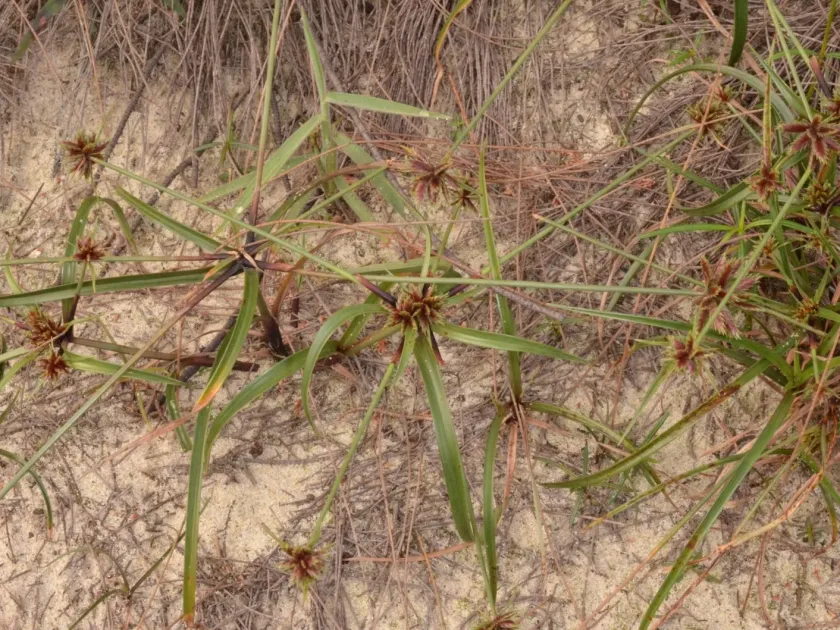
Description
Sowing dates
Mariscus radians is a member of the Cyperaceae family, commonly recognized as a sedge species with significant potential for forage production. It is a perennial plant characterized by its ability to form dense clusters that thrive in moist environments.
Sowing should be performed during the onset of the rainy season to ensure sufficient moisture for germination. Due to the small seed size, shallow sowing techniques or broadcasting methods followed by light rolling are highly recommended to establish firm soil-to-seed contact.
The establishment phase requires careful management, as the plant exhibits slow initial growth. It is often utilized in pasture restoration projects, where it can be overseeded into existing grasslands to increase overall forage biodiversity and biomass.
Proper density of seeding is essential to minimize competition between individual plants. Adequate spacing allows each tussock to develop a robust root system, which is critical for long-term survival in variable climatic conditions.
Once established, the species demonstrates strong persistence and the ability to recover effectively after grazing cycles. This makes it a reliable component in sustainable agricultural systems located in humid tropical zones.
Growing requirements
Mariscus radians thrives in soils with high moisture-retention capacity, specifically favoring loam and clay-rich soil types. While it enjoys water, it requires moderate soil drainage to prevent root stagnation and associated pathogens.
The plant is highly heliophilic, meaning it requires full solar radiation to maintain optimal photosynthetic rates. Shade significantly inhibits biomass production and reduces the nutrient density of the plant tissue.
Temperature tolerance is well-suited for tropical and subtropical climates, with an ideal growth range between 22°C and 30°C. It exhibits resilience to heat, provided that soil moisture remains consistent throughout the active growing season.
Regarding soil fertility, the plant responds positively to nitrogen fertilization, which is often used in managed pastures to accelerate regrowth. A balanced supply of phosphorus and potassium is recommended to support deep root development.
Avoidance of saline soils is critical for successful cultivation. Soil testing prior to seeding is advisable to ensure that the pH levels fall within the preferred slightly acidic to neutral range for optimal nutrient uptake.
Main diseases and pests
Fungal pathogens represent the primary health challenge for Mariscus radians, particularly leaf spot diseases that manifest during periods of high humidity and poor ventilation. These infections can drastically reduce leaf surface area.
Root rot, driven by stagnant water and poor soil aeration, is a major threat that can lead to rapid decline in stand density. Maintaining proper drainage and avoiding waterlogging are the most effective preventative measures.
Insect pests such as lepidopteran larvae often target the foliage during peak growing phases. Monitoring for signs of herbivory is necessary, especially during the establishment phase when the plants are most vulnerable to defoliation.
Soil-borne insects can also impede nutrient uptake by damaging the root structure. Integrated pest management strategies, including rotational grazing and cultural practices, are preferred to chemical interventions in pasture settings.
Overall plant resilience is generally high when growing conditions are met. Providing sufficient air circulation and avoiding overgrazing are the best methods to maintain a healthy and productive stand of Mariscus radians over many seasons.