
Mariscus laxiflorus
Mariscus laxiflorus
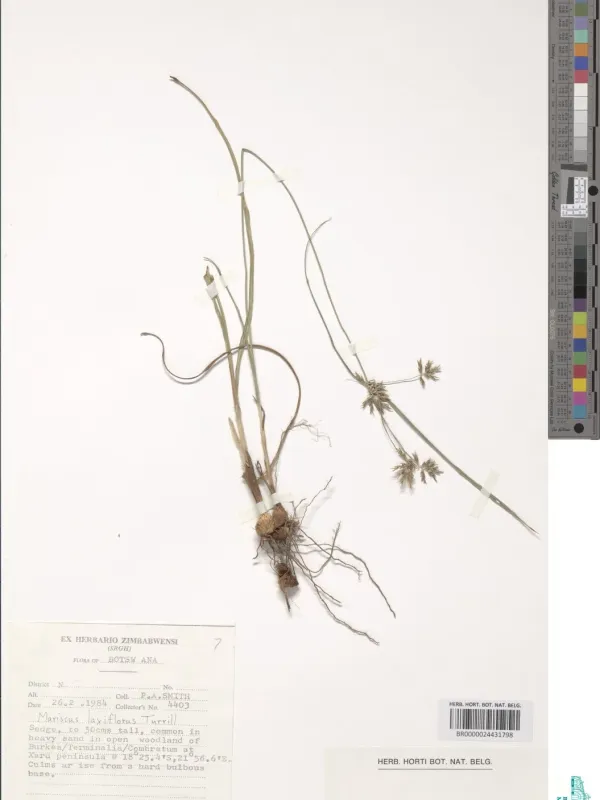
Description
Growing requirements
Mariscus laxiflorus is a perennial herb species belonging to the Cyperaceae (sedge) family. This plant is well-adapted to aquatic and semi-aquatic habitats, frequently found in wetlands and marshy agricultural terrains.
The botanical structure of the plant features a rhizomatous system that supports upright, triangular stems and loose inflorescences, which contribute to its resilience in saturated soil conditions.
Regarding cultivation, Mariscus laxiflorus thrives in waterlogged, nutrient-rich soils. It requires consistent hydrological support to maintain vegetative vigor and biomass production throughout the season.
Climate preferences include warm environments with high humidity levels. While it can withstand occasional dry periods, its peak development occurs when moisture levels remain stable and solar exposure is sufficient.
In an agricultural context, this species is mainly valued for its potential use in fodder production and soil stabilization projects within water-managed landscapes.
Main diseases and pests
The main agricultural threats to Mariscus laxiflorus include fungal diseases triggered by high moisture and poor air circulation. Common issues include rusts and various leaf blight pathogens.
Insects, particularly stem borers and leaf-eating beetles, represent the most significant pest risks. These organisms can weaken the plant structure, leading to reduced yield and poor quality of the biomass.
Field management strategies prioritize the prevention of stagnant water areas that may promote root rot or other soil-borne diseases throughout the growing cycle.
Regular monitoring of plant health is essential, especially in dense plantations where the microclimate under the canopy may favor the rapid spread of fungal spores.
Implementing an integrated pest management approach, including biological controls, is highly recommended to protect the crop while preserving the surrounding wetland ecosystem integrity.