
Majidea
Majidea
Propagation of Majidea is primarily achieved through seeds. The seeds have a relatively dense outer coat, so scarification or soaking in warm water for 12–24 hours is recommended to improve germination rates.
What the section contains


Majidea
The optimal time for sowing is spring or early summer, when temperatures remain consistently between +20...+25°C. Ensuring high humidity and soil moisture during the germination stage is critical for success.
Use a light, well-draining substrate based on peat, perlite, and turf soil for sowing. Plant seeds at a depth of no more than 1–1.5 cm to ensure that emerging sprouts can easily reach the surface.
Place seed trays in a warm location with bright, indirect light, avoiding direct sunlight. Regular watering is mandatory, but avoiding waterlogged soil is essential to prevent seed rot during the initial stages.
After the first pair of true leaves appears, seedlings should be transplanted into individual pots. In the first few months, the plant grows quite slowly and requires careful monitoring of the microclimate.
Majidea belongs to the Sapindaceae family and is native to the tropical regions of East Africa. It is a tree or large shrub that thrives in warm and humid climates.
For optimal development, the plant requires well-lit areas protected from strong, cold winds. Majidea is extremely sensitive to freezing temperatures and, in temperate regions, is grown exclusively as a greenhouse or indoor ornamental plant.
The soil must be fertile with a neutral or slightly acidic pH level. A key requirement is excellent aeration and the presence of a high-quality drainage layer, as the root system does not tolerate waterlogging.
During the active growing season, the plant requires regular fertilization with complex mineral nutrients. It is also important to maintain high air humidity, which is especially relevant in homes with central heating systems.
Adult specimens can tolerate short-term drought; however, to maintain the decorative appearance of the canopy and promote vibrant flowering, a consistent watering schedule without allowing the root ball to dry out completely is necessary.
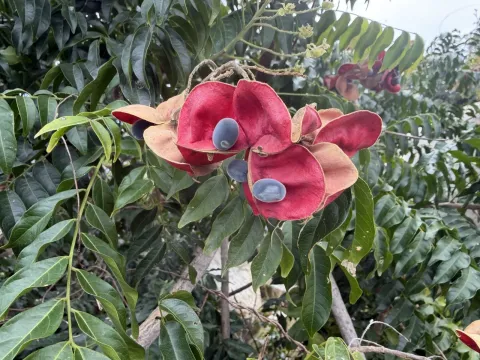
The agricultural and ornamental value of Majidea lies mainly in its aesthetic appeal. The culture is prized for its spectacular fruit capsules, which split open upon maturity to reveal bright red seeds with dark spots.
Harvesting for decorative purposes should be performed after the fruits have fully matured on the tree. This ensures the aesthetic integrity of the "opened" capsules, which are widely used in floral arrangements.
During harvesting, it is important to carefully cut the fruit stalks with pruning shears to avoid damaging the main branches of the tree. The fruits retain their shape for a long time, making them a popular dried material.
Collected materials should be dried in a dark, well-ventilated area to prevent mold growth. Properly dried Majidea seed capsules can be stored and used for several years.
The plant can also be used in the landscape design of tropical gardens as a feature tree or part of group plantings, thanks to its unique canopy shape and attractive inflorescences.
The main pests for Majidea in indoor or greenhouse conditions are spider mites and scale insects. They thrive in low humidity, making regular inspection of the foliage essential for control.
Diseases most often occur due to improper care, particularly overwatering. Excess moisture leads to root rot, which can quickly spread to the aerial parts of the plant.
For pest management, it is recommended to use systemic insecticides or acaricides while strictly adhering to dosage instructions. At the first signs of rot, irrigation should be reduced and fungicide treatments applied.
Disease prevention involves maintaining hygiene in the cultivation area, regularly cleaning dust from leaves, and ensuring adequate airflow to the plant's canopy.
Monitoring the condition of the substrate and performing timely repotting is crucial to prevent soil nutrient depletion and the buildup of harmful microorganisms within the container.