
Majidea zanguebarica
Majidea zanguebarica
Description
Sowing dates
Propagation of Majidea zanguebarica is primarily achieved through seeds. The most favorable period for sowing is during the spring months to maximize growth during the warm season.
It is essential to scarify the seeds or soak them in warm water for at least 24 hours to soften the hard outer coat and improve germination rates.
Sowing should be done in a light, well-draining potting medium, maintaining a stable temperature between 22 and 26 degrees Celsius for optimal sprouting.
Once seedlings emerge, they must be gradually acclimated to brighter light conditions to prevent leggy growth or transplant shock.
Repotting into individual containers is best performed after the first set of true leaves develops to ensure the root system is well-established.
Growing requirements
Majidea zanguebarica belongs to the Sapindaceae family and is native to the coastal regions of East Africa, thriving in humid tropical environments.
The plant requires fertile, well-draining soil with a neutral to slightly acidic pH level to maintain healthy foliage and robust growth.
As a non-hardy species, it must be grown in containers in cooler regions and moved indoors or into a greenhouse before the first autumn frost.
Regular irrigation is necessary during the active growing cycle, but the substrate must be allowed to dry slightly between waterings to prevent root rot.
Sunlight exposure is crucial, as the tree performs best in bright, dappled light, which mimics its natural habitat under the forest canopy.
Main diseases and pests
While relatively robust, the plant can be susceptible to common greenhouse pests such as spider mites and mealybugs, especially in dry indoor air.
Overwatering is the most significant threat to the root system, frequently leading to fungal infections that can quickly weaken the entire tree.
Insufficient light often causes a decline in vigor, making the plant more vulnerable to secondary infections and opportunistic pests.
Regular inspection of the leaf undersides is recommended to detect and treat pest infestations before they spread to other parts of the plant.
Maintaining proper air circulation around the canopy helps significantly reduce the incidence of fungal pathogens and promotes healthier foliage.
Harvesting
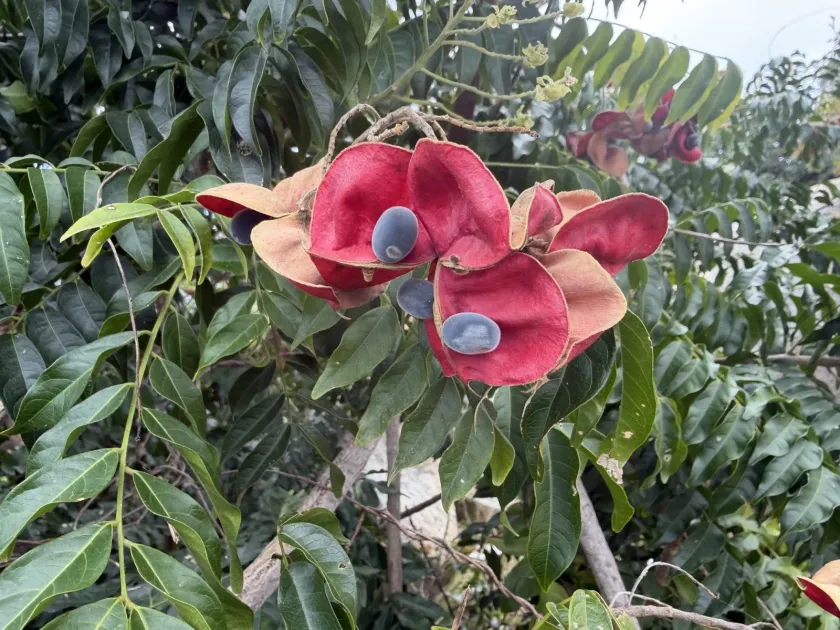
The main horticultural interest in Majidea zanguebarica lies in its striking fruit, which splits to reveal brilliant red aril-covered seeds.
Harvesting occurs naturally as the pods reach maturity and open on the tree, showing off the vibrant aesthetic seeds used for decorative purposes.
Proper timing is required to collect the seeds before they fall or are damaged by environmental exposure after the pod has fully opened.
Once harvested, the material should be kept in a cool, dry area to ensure the longevity of the seeds' unique coloration and structural integrity.
The plant is highly regarded in specialized horticulture for its ornamental value, often used as an accent piece in conservatories or botanical gardens.