
Mahonia pumila
Mahonia pumila (Greene) Fedde
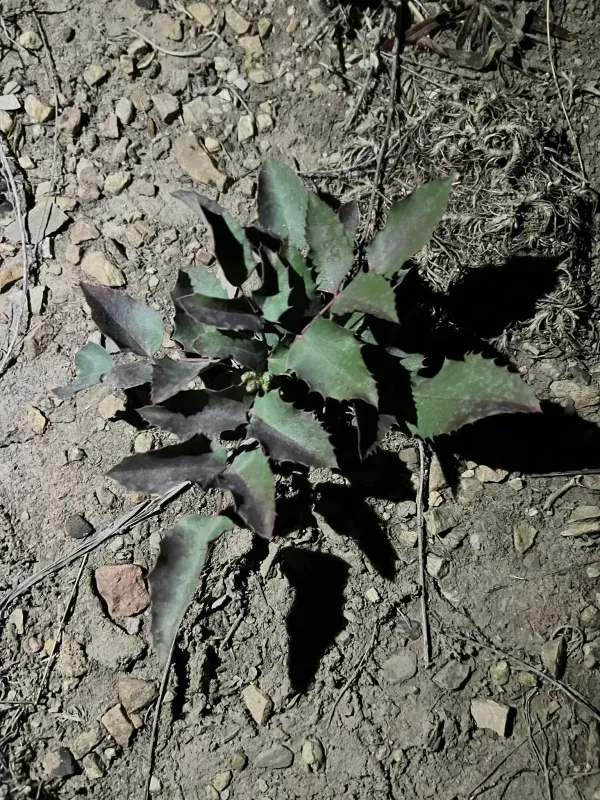
Description
Sowing dates
Mahonia pumila is propagated through seeds or vegetative methods, primarily by utilizing root suckers that emerge from the parent plant. Seeds should be sown outdoors in autumn to allow for natural cold stratification over winter.
When sowing in spring, seeds require a cold stratification process in a controlled environment at temperatures between 0 and 5 degrees Celsius for approximately three months.
Vegetative propagation via semi-hardwood cuttings is common during the summer season. Using rooting hormones significantly improves the establishment success of the new cuttings.
Transplanting seedlings to their final location is best performed in early spring or autumn. Providing adequate spacing is essential to ensure proper root development and nutrient access.
Young plants need diligent care, including weeding the surrounding area, as the species grows slowly and can be easily outcompeted by aggressive weeds in its early stages.
Growing requirements
Mahonia pumila is a low-growing evergreen shrub belonging to the Berberidaceae family, native to the mountainous terrains of western North America.
The plant thrives in well-drained, fertile, loamy soils. It is highly sensitive to waterlogging, necessitating excellent drainage to prevent root rot in heavier soil types.
Shade or partial shade is the preferred environment for this species. Intense direct sunlight can lead to leaf scorching, whereas moderate shade maintains the dark green color of the foliage.
While the species is hardy, protecting young plants during severe winters with mulch or protective covers helps prevent desiccation caused by freezing winds.
Annual maintenance involves applying balanced fertilizers in the early spring and organic mulching to help retain soil moisture and regulate soil temperature.
Yield
The fruit of Mahonia pumila consists of small, dark blue berries coated with a waxy bloom. These berries possess a distinctively tart flavor profile.
Productive harvesting typically begins once the plant is well-established, usually 3 to 4 years post-planting, depending on local climate conditions and soil fertility.
The berries are valued for their potential in food processing, including the production of jellies, preserves, and natural food coloring agents due to their pigment content.
Regular harvesting and sanitary pruning of older, less productive wood encourage new growth, which in turn leads to improved fruit yields in subsequent years.
Post-harvest handling is critical, as the berries are perishable and should be processed or refrigerated shortly after collection to preserve their quality.
Main diseases and pests
Mahonia pumila is generally robust, but it can be susceptible to powdery mildew during periods of high humidity and poor air circulation around the shrub.
Rust infections may occasionally appear as small spots on the underside of the leaves. Managing these infections often requires the application of copper-based fungicides.
Aphids represent a common pest threat, particularly targeting tender new shoots during the spring growth flush and weakening the plant's overall vitality.
Scale insects may also impact the plant by feeding on the sap, requiring mechanical removal or targeted insecticide applications to protect the shrub's health.
Maintaining proper spacing between plants and ensuring good air drainage is the most effective cultural practice to minimize the incidence of pests and diseases.