
Mahonia nitens
Mahonia nitens C. K. Schneid.
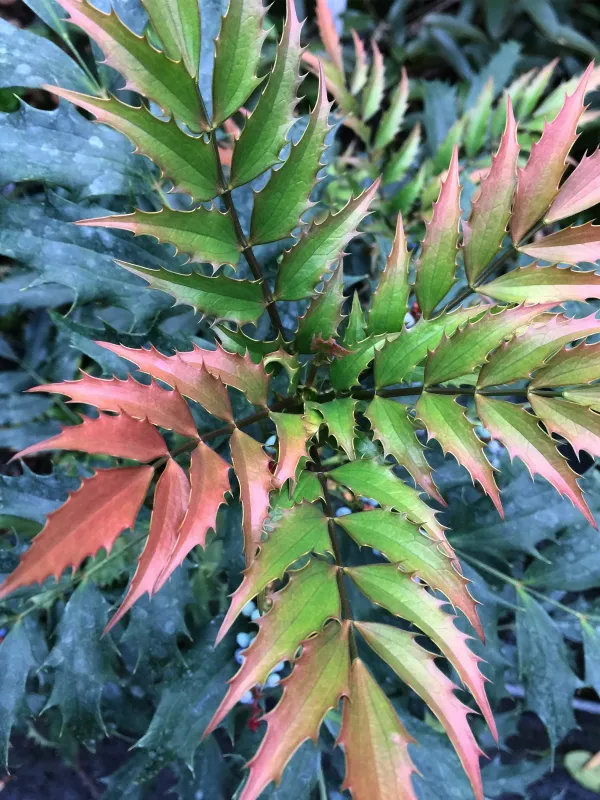
Description
Growing requirements
Mahonia nitens is an evergreen shrub belonging to the Berberidaceae family. Originating from the mountain forests of China, it is highly valued for its striking, glossy, compound leaves and vibrant yellow blossoms that appear in early spring.
The plant thrives in partial shade conditions. It is essential to choose a site protected from harsh, drying winds, which can desiccate the foliage and diminish the shrub's aesthetic appeal throughout the winter season.
Cultivation requires fertile, well-drained soil with a neutral to slightly acidic pH. Proper soil aeration is crucial for the root system, as the plant does not tolerate waterlogging; adding organic matter or sand to heavy clay soils is recommended.
Regarding climate, Mahonia nitens is moderately hardy. In colder climates, young plants should be provided with winter protection, such as mulching with peat or wood chips to prevent root damage caused by deep soil freezing.
General care involves consistent watering during dry periods and seasonal feeding with balanced fertilizers. Regular pruning after flowering helps maintain a dense habit and promotes the development of fresh, healthy growth.
Main diseases and pests
Common plant diseases include powdery mildew and leaf rust, often triggered by excessive humidity or poor air circulation. Providing adequate space between plants and applying fungicides when necessary helps mitigate these risks.
Pests such as aphids and scale insects may occasionally infest the plant, particularly in sheltered or stressed conditions. Regular inspections and the use of horticultural oils or soaps are effective management strategies for hobbyist gardeners.
Economically, the plant is primarily used in ornamental horticulture for landscape design and private gardens. Its ability to create dense, evergreen screens makes it an excellent choice for hedge formation and focal points.
The fruit, produced in clusters of blue-black berries, has historical and culinary utility. They are often processed into jellies or wines, though they should be prepared properly to balance their naturally tart flavor profile.
Mahonia nitens serves an important ecological role as an early-season nectar source for bees and other pollinators. Its adaptability to diverse environments makes it a reliable addition to many landscape planting schemes.