
Maerua crassifolia
Maerua crassifolia
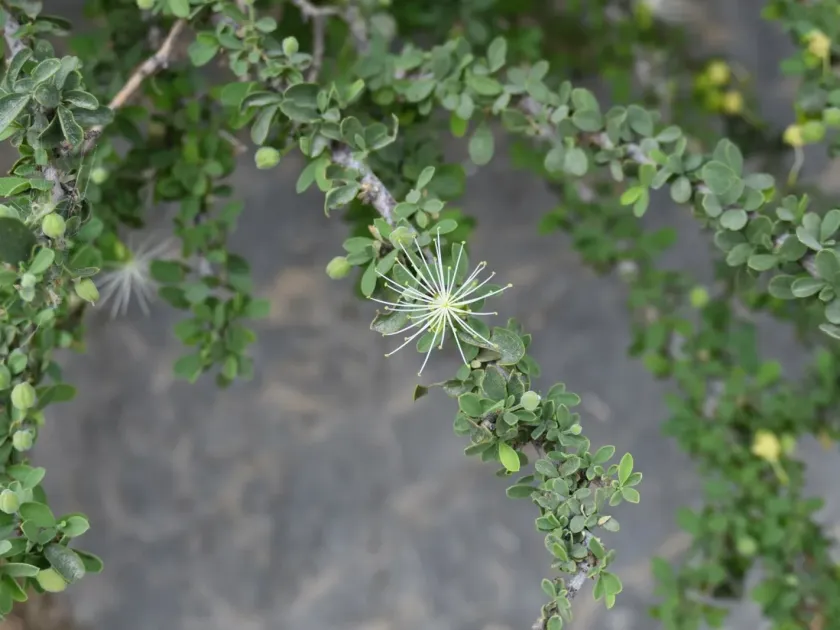
Description
Growing requirements
Maerua crassifolia is a resilient woody species belonging to the Capparaceae family, widely recognized for its adaptation to the arid climates of Northern Africa and the Arabian Peninsula.
The plant exhibits remarkable physiological tolerance to high solar radiation and extreme heat, thriving in environments with annual rainfall often dropping below the threshold for traditional agriculture.
It prefers well-drained, deep soils, ranging from sandy plains to rocky substrates, where its deep-reaching taproot system can access moisture trapped in lower soil layers.
As a key component of agroforestry in desert regions, it provides significant shade, which modifies the microclimate and supports the growth of smaller understory vegetation.
In terms of economic value, it serves as a vital forage crop for camels and small ruminants during the dry season, and some parts of the plant are traditionally harvested for edible purposes.
Main diseases and pests
The primary threats to the sustainability of Maerua crassifolia populations are overgrazing, which prevents natural regeneration, and systematic harvesting for fuel wood by local populations.
While the species is naturally robust against many environmental stresses, it is susceptible to specific leaf-eating caterpillars and occasional infestations by wood-boring beetles.