
Maerua angolensis
Maerua angolensis
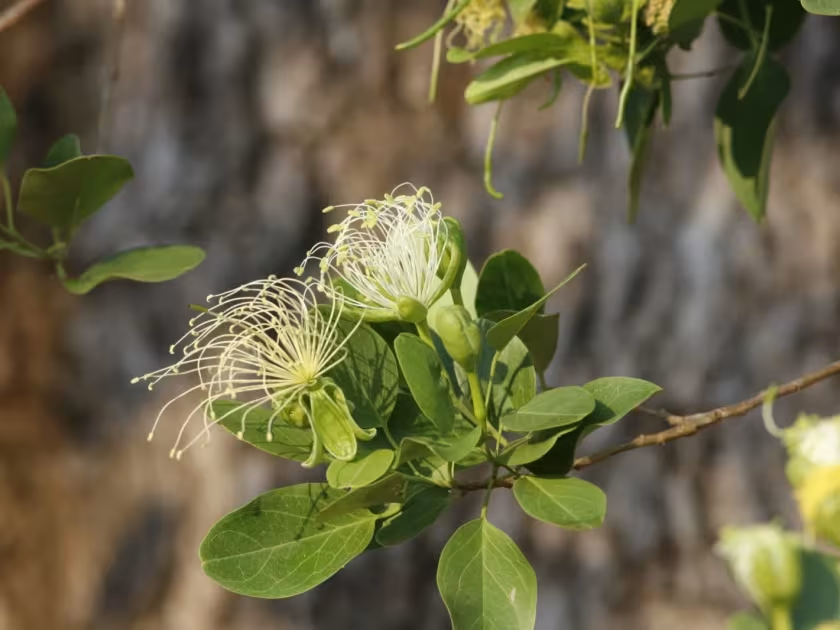
Description
Growing requirements
Maerua angolensis is an evergreen or deciduous shrub or small tree belonging to the Capparaceae family. It is a vital botanical component of African savanna ecosystems, known for its ability to thrive in challenging environmental conditions where water is often scarce.
The origin of this species is tied to tropical Africa, spanning a vast range from Senegal to Ethiopia and down to South Africa. It typically inhabits dry woodlands, scrublands, and open savanna areas, demonstrating high adaptability to fluctuating environmental pressures.
When it comes to soil requirements, the plant is quite versatile. It prefers well-drained sandy or rocky soils, which are typical of its native habitat. It exhibits remarkable tolerance to poor soil quality and high salinity, making it a candidate for land reclamation and soil stabilization projects.
The climate requirements for Maerua angolensis are strictly tropical. It thrives in high-temperature environments and has zero tolerance for frost. Its growth strategy is built around efficient water usage, relying on a deep taproot system to access subterranean moisture during the long dry seasons.
In terms of agricultural use, this tree serves as a critical browse species. Its foliage remains green during periods when other grasses dry up, providing essential nutrients for camels, goats, and cattle. It is an indispensable resource for pastoral communities in arid regions.
Main diseases and pests
The primary threats to the species include overgrazing and the removal of biomass for fuel wood, which often prevents the establishment of new generations of trees. Deforestation in its native range remains a significant concern for the long-term sustainability of the population.
Pest issues are generally minimal under natural conditions, though certain leaf-eating insects can cause cosmetic damage to the canopy. Root-related fungal diseases may occur in areas with poor drainage, but the plant is generally resistant to most common botanical pathogens in its native environment.