
Maerua cafra
Maerua cafra
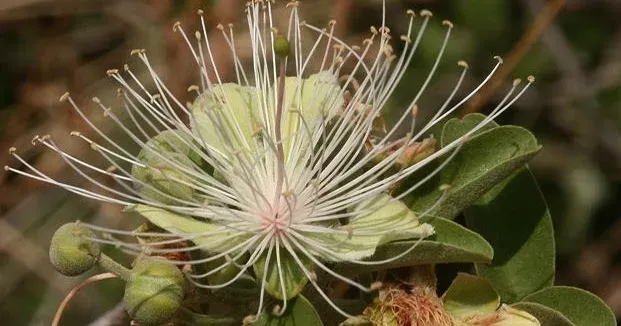
Description
Growing requirements
Maerua cafra, commonly known as the bush cherry, belongs to the Capparaceae family. It is a slow-growing, evergreen tree or shrub recognized for its dense, glossy foliage and unique clusters of creamy-white or yellow flowers.
Native to Southern and Eastern Africa, this species is highly adaptable to various habitats, ranging from wooded grasslands to rocky outcrops. It prefers well-drained soil types and can thrive in poor, rocky ground, making it a robust choice for xeriscaping.
The plant requires full sun exposure to maintain its compact shape and ensure healthy flowering. While it possesses some tolerance to light shade, reduced sunlight often results in a sparser canopy and fewer blooms during the peak season.
Climate requirements include warm temperatures and protection from heavy frost. Although mature specimens can withstand mild cold spells, young trees should be shielded from freezing temperatures during their first few years of establishment.
In terms of agricultural management, the plant is relatively low-maintenance. Once established, it is remarkably drought-tolerant, requiring irrigation only during prolonged dry spells or in container cultivation settings.
Harvesting
Maerua cafra has significant ethnobotanical value. Local communities have traditionally utilized various parts of the tree, such as the roots and bark, for medicinal purposes, including the treatment of skin conditions and digestive ailments.
In modern horticulture, the bush cherry is valued for its contribution to biodiversity, as its nectar-rich flowers attract a wide range of pollinators, including bees, butterflies, and nectar-feeding bird species.