
Tree clubmoss
Lycopodium obscurum
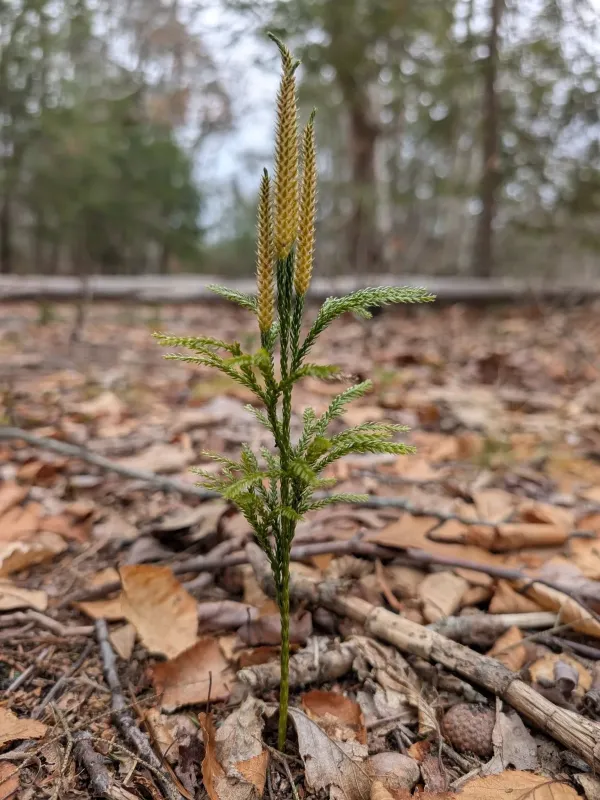
Description
Growing requirements
Tree clubmoss (Lycopodium obscurum) belongs to the Lycopodiaceae family and is a perennial evergreen spore-bearing plant. In the wild, this species is mainly found in coniferous and mixed forests of North America and East Asia, preferring shaded areas with moderate moisture.
The plant possesses a unique morphology: it consists of a horizontal underground rhizome and erect aerial shoots that resemble miniature conifer trees. The height of the vertical stems usually varies from 15 to 30 centimeters.
For successful growth, the clubmoss requires acidic, well-drained, loose forest soils rich in humus and leaf litter. The plant is extremely sensitive to direct sunlight, so optimal conditions for it are deep shade or partial shade under the forest canopy.
Climatic requirements include high air and soil humidity throughout the growing season. The crop does not tolerate drought or soil compaction, so in agrotechnical experiments, it is important to maintain a stable microclimate without sudden temperature fluctuations.
In terms of economic use, tree clubmoss is rarely considered a mass agricultural crop due to its extremely slow growth rates and the difficulty of spore propagation. Nevertheless, it is of interest for decorative gardening, forest-style landscape design, and the pharmaceutical industry.