
Lycopodium dubium
Lycopodium dubium
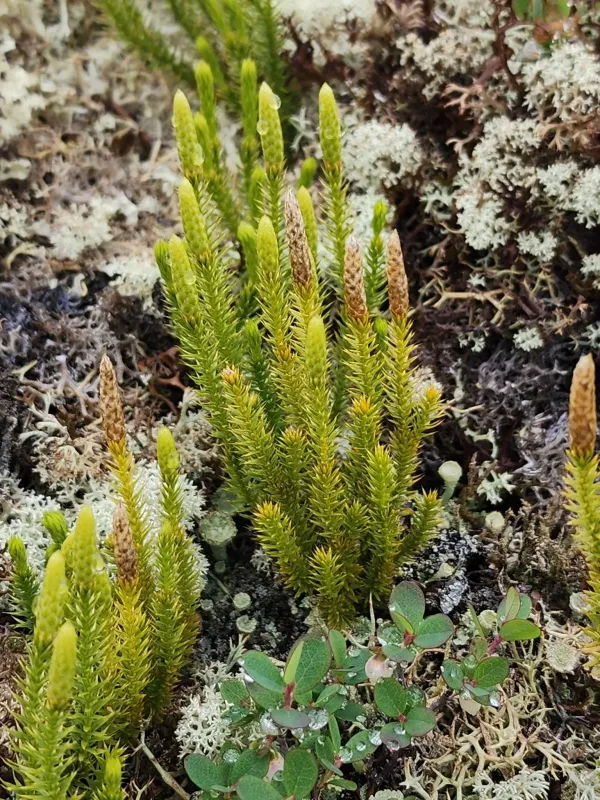
Description
Sowing dates
Lycopodium dubium is not a cultivated agricultural crop. As a forest-dwelling spore-bearing plant, it does not follow traditional sowing or farming cycles. Its propagation in the wild depends on complex ecological niches.
The plant reproduces via spores that require a symbiotic relationship with specific soil fungi to germinate. This biological dependency makes it impossible to seed or cultivate it on standard agricultural land.
The lifecycle of this species is extremely slow, taking many years to reach a mature stage. Because of this, it cannot be farmed as a viable agricultural product or commodity crop.
There are no known agricultural techniques for planting or large-scale production of this species. All management efforts are strictly directed toward conservation rather than commercial farming.
Attempts to transplant specimens for ornamental or research purposes rarely succeed, as the plant suffers from sudden changes in its delicate symbiotic soil environment.
Growing requirements
This species requires acidic, well-drained, humus-rich forest soils. It thrives in coniferous or mixed forest environments where the leaf litter provides constant moisture and necessary acidity.
The presence of mycorrhizal fungi in the soil is an absolute requirement for its survival. Without these microscopic partners, the plant cannot absorb nutrients effectively during its initial stages of development.
Lycopodium dubium is highly shade-tolerant and sensitive to direct sunlight. Intense light, along with exposure to dry winds, can rapidly destroy the delicate green shoots and stems of the plant.
The climate must be cool and humid with minimal temperature fluctuations. It is poorly adapted to agricultural regions characterized by open fields and significant daily temperature changes.
Soil pH levels should remain low, ideally between 4.0 and 5.5. Any agricultural practice such as liming or fertilizing the soil is lethal to this sensitive forest species.
Yield
There is no agricultural yield for Lycopodium dubium. As a wild plant, its harvesting is strictly regulated and limited to small amounts for specific pharmaceutical or scientific purposes.
The biomass production of this plant is negligible. A single mature clubmoss clump produces only a very small quantity of spores, which are rarely collected due to the risk of destroying the plant.
Because the growth rate is so slow, even a minor harvest can take decades to recover. Thus, it cannot be defined in terms of harvestable yield or economic productivity per unit area.
Pharmaceutical use of spores is restricted by local laws in most countries where the plant is found. Sustainability is prioritized over any potential commercial extraction of spores.
The total lack of commercial viability confirms that Lycopodium dubium will never be a target crop for agricultural development or industrial-scale production.
Main diseases and pests
The primary threats to this plant are habitat loss, deforestation, and the drainage of wetlands. Any change in the forest canopy alters the humidity, which is vital for its survival.
Environmental pollution, including nitrogen deposition from nearby agricultural activities, can alter the soil composition and kill the essential mycorrhizal fungi associated with the plant.
Invasive plant species and excessive forest floor disturbances pose a constant threat to the survival of existing populations by outcompeting the slow-growing clubmoss.
Illegal or careless harvesting of the vegetative parts and spores by amateurs often leads to the death of entire patches, as the plant cannot regenerate quickly after physical damage.
Climate change, manifesting as prolonged summer droughts and heatwaves, poses an increasing risk to the survival of populations located in marginal forest areas.