
Stiff clubmoss
Lycopodium annotinum
Description
Growing requirements
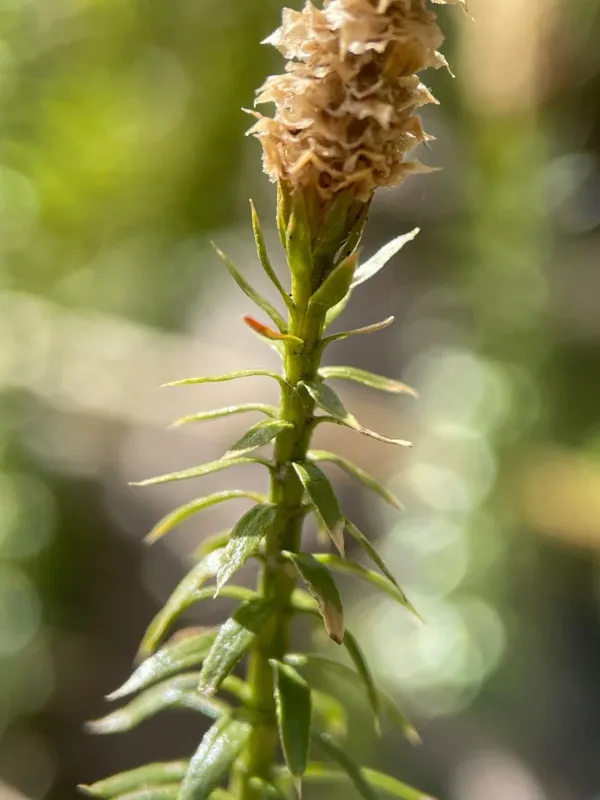
Stiff clubmoss (Lycopodium annotinum) is a perennial, evergreen vascular plant belonging to the Lycopodiaceae family. It is characterized by its trailing stems that can grow up to two meters long, creeping along the forest floor and rooting at intervals to form extensive, moss-like carpets.
The natural habitat of this species is found in the boreal and temperate zones of the Northern Hemisphere. It thrives in humid coniferous forests, particularly in areas with acidic soil, shade, and a thick layer of decomposing needles, which provide the essential moisture and protection.
The plant requires a specific symbiotic relationship with soil fungi (mycorrhiza) for its development. Because of this complex biological dependency and its extremely slow growth rate, stiff clubmoss cannot be commercially farmed using traditional agricultural techniques or crop rotation.
The life cycle of the plant is long and delicate, requiring stable environmental conditions. It propagates primarily through spores, which develop in specialized terminal cones (strobili). The gametophyte phase can take over a decade to reach maturity, making the population very sensitive to disturbances.
Conservation is a major aspect of managing stiff clubmoss. Due to its slow reproductive cycle and specific ecological needs, the plant is protected in many regions. It is not an agricultural crop in the common sense, but rather a wild forest plant with restricted harvesting regulations.
Yield
The primary economic value of Lycopodium annotinum comes from its spores, commonly referred to as lycopodium powder. This fine, pale-yellow powder is composed of microscopic particles that possess exceptional water-repellent properties due to their high oil content.
In the pharmaceutical industry, lycopodium powder is used as an inert coating for pills to prevent them from adhering to each other. It is also utilized in medical settings as a soothing agent in powders for skincare and treatment of sensitive areas in infants.
Historically and industrially, the powder has been used in metal casting. When applied to sand molds, it creates a non-stick surface that allows for clean, smooth casting of complex metal parts, as the powder prevents molten metal from bonding with the mold material.
Harvesting involves collecting the spore-bearing strobili during late summer. The cones are dried in controlled environments, then gently beaten or shaken to release the spores, which are subsequently sifted through fine meshes to ensure a high level of purity for industrial use.
Given the low yield per plant and the potential for ecological damage, large-scale harvesting is rarely sustainable. Industry has increasingly turned to synthetic substitutes or alternative materials to meet the demand, helping to protect natural populations of the clubmoss.
Main diseases and pests
Environmental degradation, including deforestation, soil compaction, and the drainage of wetlands, poses the most significant threat to stiff clubmoss. Any disturbance that removes the protective forest canopy or alters the soil pH can destroy the delicate mycorrhizal networks.
While the plant is relatively resistant to traditional agricultural pests, it is highly susceptible to climate change impacts. Prolonged droughts or excessive temperatures disrupt the moisture balance in the forest floor, which is critical for the germination of spores and the survival of young gametophytes.
Competition from more aggressive, fast-growing flora is an increasing challenge. As forest ecosystems change, stiff clubmoss may be outcompeted by shrubs and grasses, leading to a fragmented distribution and a reduction in the density of existing stands.
Pollution, especially atmospheric nitrogen deposition and heavy metal accumulation, can inhibit the plant’s reproductive capacity. Because the plant absorbs moisture directly from the environment, it is highly sensitive to the quality of air and rainwater in its immediate vicinity.
Legal protection and habitat management are the primary means of mitigating these threats. Sustainable forestry practices, such as maintaining forest cover and protecting known populations during logging operations, are essential for the long-term survival of this ancient plant species.