
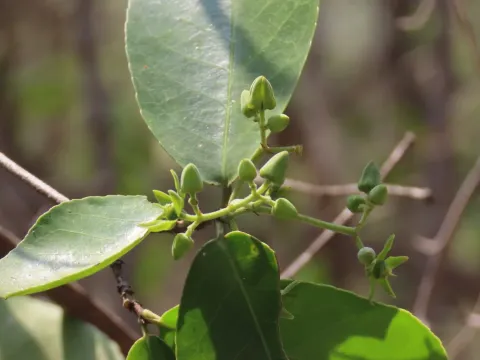
Loeseneriella
Loeseneriella
Loeseneriella is a genus of woody lianas belonging to the Celastraceae family. Naturally, these plants are distributed across the tropical regions of Africa, Asia, and the Americas, occupying diverse forest habitats.
What the section contains

Loeseneriella
The plant thrives in humid tropical climates characterized by high average annual temperatures. Successful development requires stable light conditions and protection from direct, dehydrating winds that can damage the foliage.
Soil requirements focus on well-drained, nutrient-rich organic substrates. The culture is highly sensitive to waterlogging, necessitating excellent drainage systems to prevent root rot and ensure healthy growth.
Biologically, the species has evolved to compete for sunlight within dense forest canopies. In agricultural or greenhouse cultivation, the plant requires structural supports to allow its climbing stems to ascend and expand vertically.
Development is heavily dependent on moisture availability. Within cultivation zones, maintaining high atmospheric humidity is essential, making the species particularly well-suited for tropical settings or controlled greenhouse environments.
The agricultural application of Loeseneriella is currently limited to specialized sectors. It is primarily valued as a source of bioactive compounds that demonstrate significant pharmacological potential.
Scientific studies indicate the presence of specific secondary metabolites in the plant's tissues. Yield is measured in terms of leaf and bark biomass production, which is harvested for industrial or laboratory extraction.
Due to the lack of large-scale industrial plantations, standardized yield data per hectare is currently unavailable. The harvesting process is labor-intensive and requires precision to ensure the quality of the raw plant material.
The biological cycle of the liana involves a relatively long maturation period. Optimal harvest yield is only achieved once the plant has developed sufficient concentrations of target compounds within its woody stem tissues.
Current research efforts are directed toward genetic conservation and the investigation of the chemical profile of wild populations, with the goal of eventually developing superior cultivated varieties.