
Loeseneriella africana
Loeseneriella africana
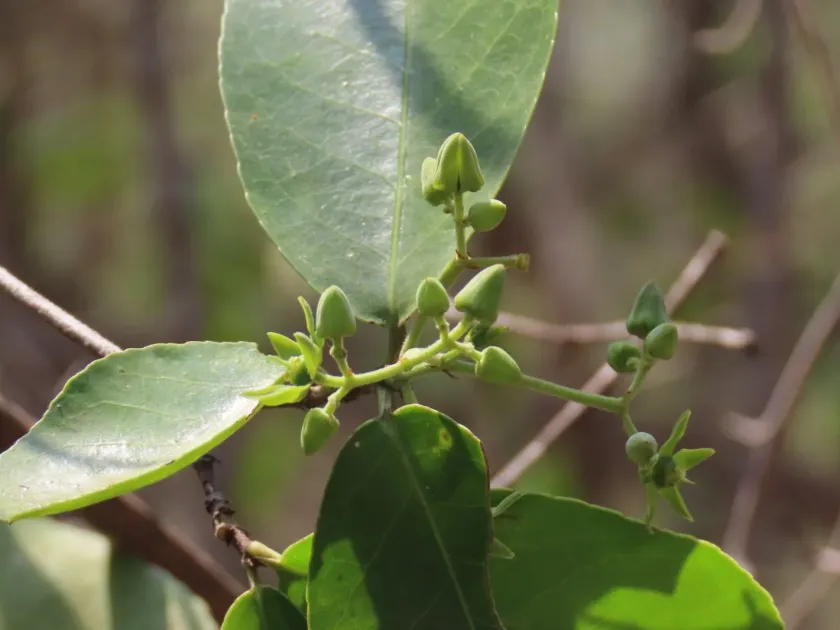
Description
Growing requirements
Loeseneriella africana is a climbing woody shrub or liana belonging to the Celastraceae family. It is native to the tropical regions of Africa, commonly found in forests, woodland thickets, and along riverbanks where the ecosystem supports dense climbing vegetation.
The plant thrives in warm, humid climates, typical of the tropical equatorial zone. It requires high atmospheric humidity and is sensitive to frost or prolonged dry spells, which restrict its distribution to regions with consistent rainfall patterns throughout the year.
Soil requirements focus on well-drained loamy textures that allow for good root aeration while retaining sufficient nutrients for rapid biomass development. It can grow in various soil pH levels, provided the nutrient content is high enough to support its climbing habit.
Morphologically, the plant presents with simple, opposite leaves and small clusters of flowers. As a member of the Celastraceae family, it displays characteristic features such as capsular fruits, which facilitate the dispersal of seeds once they mature in the tropical environment.
Economic and cultural importance is mainly attributed to its medicinal properties in local African healthcare systems. Various parts of the plant, including leaves and roots, are traditionally utilized to formulate remedies for diverse health conditions, leveraging their potential pharmacological activity.
Main diseases and pests
Pest threats to Loeseneriella africana include various species of lepidopteran larvae that feed on the foliage, potentially causing defoliation. Furthermore, in humid environments, the plant is susceptible to fungal pathogens that can affect the leaf surface.
Root system health can be compromised by soil-borne pathogens or parasitic nematodes if the plant is grown in overly compacted or waterlogged soils. Maintaining proper air circulation around the canopy is essential to mitigate the risks of fungal infections.