
Sticky toadflax
Linaria viscosa
Description
Growing requirements
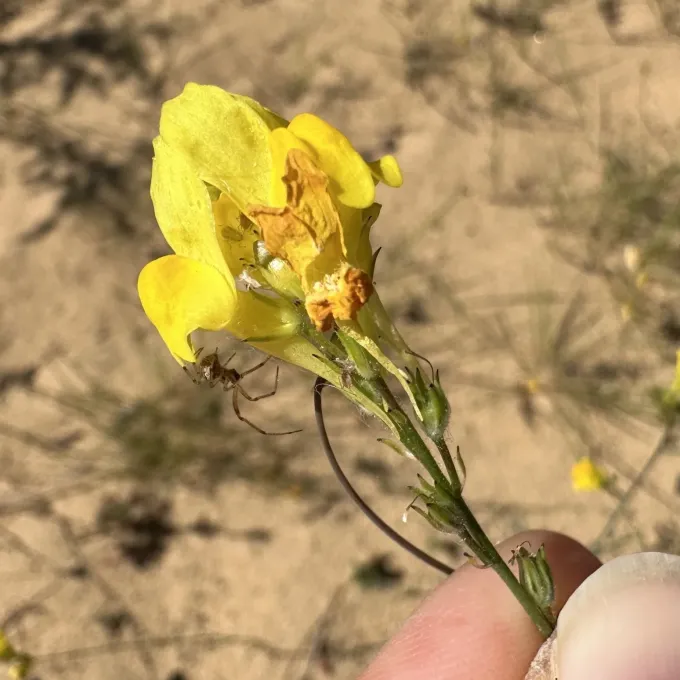
Sticky toadflax (Linaria viscosa) is a member of the Plantaginaceae family. It is a distinctive herbaceous plant native to Southwestern Europe, specifically thriving in the rocky and dry terrains of the Iberian Peninsula.
The plant is characterized by its glandular hairs, which give the stems a sticky texture, serving as a defense mechanism against certain herbivorous insects. Its leaves are narrow and lanceolate, adapted to minimize water loss under intense solar radiation.
Cultivation requires sites with full sun exposure and poor, sandy soils. The plant is highly drought-tolerant, making it an excellent candidate for xeriscaping and sustainable gardening projects where water conservation is a priority.
Soil requirements focus on neutrality and excellent drainage. Compact, clay-heavy soils are unsuitable as they prevent oxygen from reaching the roots, leading to physiological stress and eventual plant decline.
In terms of agricultural and horticultural use, sticky toadflax is valued for its low maintenance requirements. It serves as an aesthetic groundcover that thrives in impoverished soils where traditional crops fail to establish themselves.
Main diseases and pests
The primary threats to the health of Linaria viscosa are soil-borne pathogens. Root rot is a common occurrence if the soil moisture levels are not strictly managed, especially during periods of unseasonable rainfall.
Pests such as aphids often colonize the glandular parts of the stem. While the sticky secretion offers some protection, large colonies can still significantly weaken the plant by extracting essential sap.
Disease management requires preventive measures, including proper spacing and avoiding overhead irrigation. If infection occurs, fungicide treatment must be applied with caution to avoid burning the delicate plant tissues.
Monitoring for signs of wilting is the most effective way to detect early root issues. Since the plant is relatively small, hand-weeding is often preferred over chemical herbicides, which may damage the plant's sensitive structure.
Sanitation is key in controlling outbreaks. Removing debris and weeds around the base of the plant ensures better airflow and sunlight penetration, significantly reducing the survival chances of fungal spores and overwintering pests.