
Linaria supina
Linaria supina
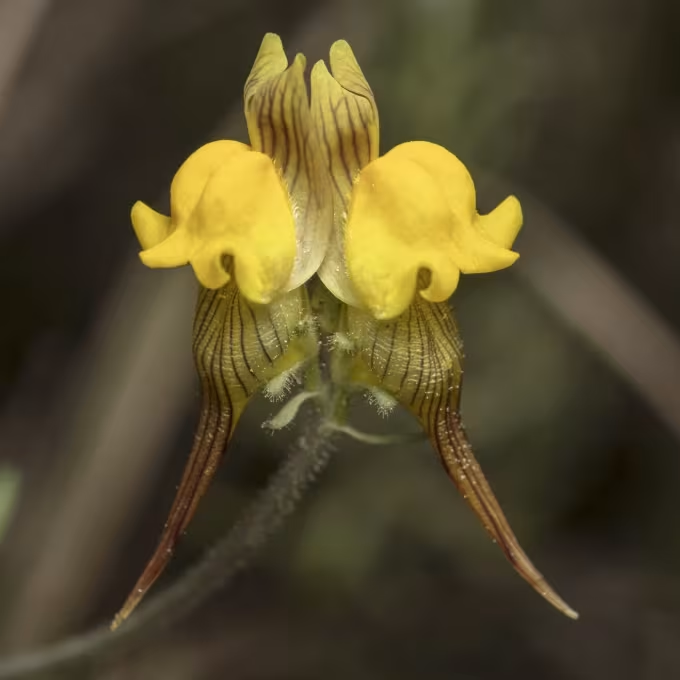
Description
Growing requirements
Linaria supina, commonly known as a type of toadflax, is a member of the Plantaginaceae family. This perennial plant is native to the Mediterranean region and is highly valued for its ability to thrive in harsh coastal or rocky environments.
The plant requires well-draining, sandy, or rocky soil to prevent root decay. It is essential to ensure that the site has excellent air circulation and receives full sun exposure to maintain its compact and healthy growth habit.
Due to its Mediterranean origin, Linaria supina is remarkably drought-tolerant once established. It thrives in nutrient-poor soils and generally does not require heavy fertilization, as excess nutrients can weaken the stems.
Climate adaptability is a specific feature of this species. While it handles heat very well, it may require protection or cultivation as an annual in regions prone to severe frost, as it is not fully hardy in extremely cold zones.
The primary use of this plant is ornamental, particularly in rock gardens, screes, and as a groundcover on sunny, dry slopes. Its prolific flowering adds significant aesthetic value to xeriscaped landscape designs.
Main diseases and pests
Fungal pathogens associated with excessive soil moisture pose the greatest threat to Linaria supina. Root rot is a common issue if the drainage is insufficient, often leading to rapid decline of the entire plant.
Pests such as aphids and spider mites can attack during hot, dry spells. Keeping the plants healthy through correct irrigation and spacing is the best way to maintain natural resistance to these infestations.
Powdery mildew can occur if the humidity levels around the foliage remain high for extended periods. Pruning and ensuring adequate spacing between plants significantly reduce the risk of this infection.
Soil-dwelling insects, such as grubs, can damage the root system, potentially causing the plant to wither. Monitoring the soil quality and avoiding over-watering helps to minimize the attraction of these pests.
Weeds are the main competitors for space and light during the plant's establishment phase. Implementing a thin layer of gravel mulch around the base serves both as a weed suppressant and a way to keep the crown dry.