
Linaria simplex
Linaria simplex
Description
Growing requirements
Linaria simplex, commonly known as a type of toadflax, is an annual herbaceous plant belonging to the Plantaginaceae family. While it is often studied as a wild plant, its presence in agricultural fields necessitates an understanding of its growth habits to manage its impact on crop yields.
Originating from the Mediterranean region, this species has adapted to arid and semi-arid conditions. It typically thrives in open, sunny locations with well-drained, often sandy or rocky soils, showcasing its resilience in habitats where moisture is limited.
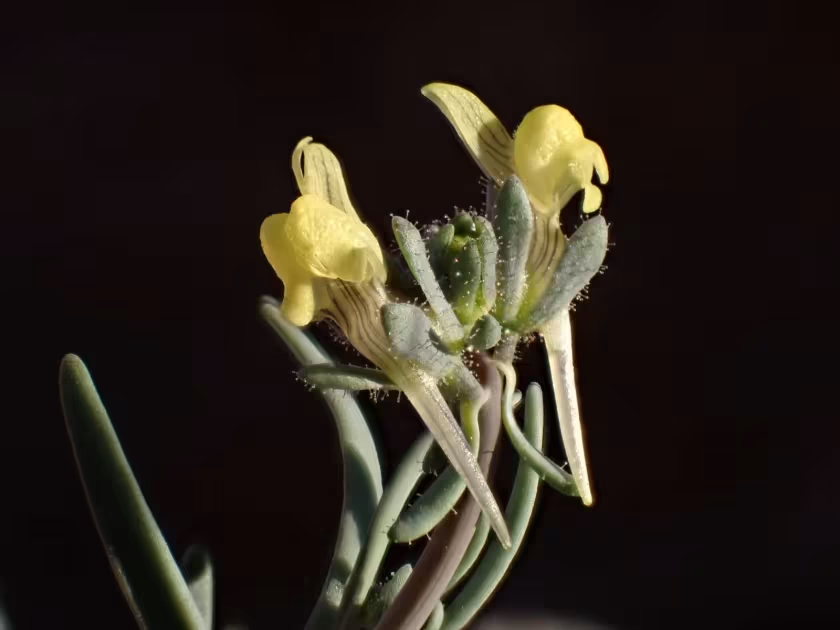
Botanically, it is characterized by slender stems that grow up to 30 centimeters in height. Its leaves are narrow and linear, an adaptation that reduces water loss through transpiration, allowing the plant to maintain physiological activity during periods of drought.
The inflorescence consists of yellow, spurred flowers arranged in terminal racemes. The plant's reproductive strategy relies on the production of numerous small seeds, which are easily dispersed by wind and water, contributing to its status as a persistent colonizer of disturbed sites.
Environmental requirements for Linaria simplex include full solar exposure and moderate to low nutrient levels. It is not shade-tolerant and generally struggles to compete in dense, well-managed crop canopies, provided that soil fertility and crop density are optimal.
Main diseases and pests
In agricultural settings, Linaria simplex acts as a competitive weed. Its impact is most significant during the crop's establishment phase, where it may compete for water and space, leading to reduced vigour and lower yields if not controlled during the early growth stages.
Regarding threats, the plant can be a host for various aphids and beetles. These insects can cause localized damage to the weed, but their potential migration to commercial crops poses an additional concern for farmers, necessitating integrated pest management approaches.
Diseases such as powdery mildew or rust fungi may affect the plant. While these diseases primarily impact the weed, they can create reservoirs of pathogens within the field margins, potentially jeopardizing the health of neighboring crop varieties if conditions become favorable for spread.
Management strategies focus on cultural practices, such as competitive planting and systematic crop rotation. By maintaining strong, healthy crops that cover the soil quickly, farmers can naturally suppress the germination and growth of light-loving weeds like Linaria simplex.
If chemical intervention is necessary, selective herbicides designed for broad-leaved weed control are typically effective. Application timing is critical; treating the weed during its seedling or rosette stage ensures the highest level of efficacy and prevents it from reaching its reproductive phase.