
Ricard's Toadflax
Linaria ricardoi
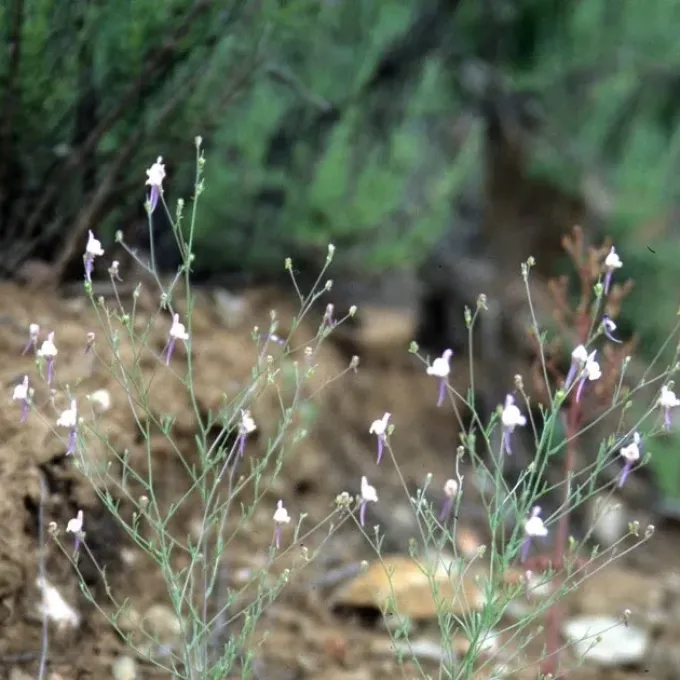
Description
Sowing dates
Ricard's Toadflax belongs to the Plantaginaceae family and is a rare botanical species. Given its natural status, cultivation practices are aimed at conservation and scientific propagation rather than large-scale industrial farming.
The sowing process typically occurs in early spring. Seeds require a period of cold stratification to break dormancy, which is a crucial step for achieving a high germination rate in controlled conditions.
Due to the extremely small size of the seeds, they should be sown on the surface of the soil or covered only by a very thin layer of substrate. Pressing the seeds gently into the soil ensures optimal contact for moisture absorption.
The planting density must remain low to mimic the plant's natural distribution. Crowding plants significantly increases the risk of fungal infections and inhibits the healthy development of individual specimens.
Establishing an environment free from weed competition is vital for the survival of seedlings. The initial growth phase is slow, making the plants vulnerable to being outcompeted by more aggressive vegetative cover.
Growing requirements
This species thrives in well-drained, lime-rich soils. Its natural adaptation to the Mediterranean climate makes it highly resistant to drought, though it requires specific soil composition to avoid moisture retention.
Sunlight is an essential factor for Ricard's Toadflax. Being a heliophilic plant, it requires full sun exposure throughout the day to ensure proper flower formation and the completion of its reproductive cycle.
The nutrient profile of the soil should be relatively low. High levels of fertilization are counterproductive, as they promote excessive foliage growth that can weaken the plant's structural integrity and resistance to disease.
The ideal site for cultivation includes rocky or sandy substrates that allow for excellent drainage. Any water accumulation around the roots is detrimental and often leads to the decline of the plant.
Climatic requirements focus on mild winters and warm, dry summers. In regions with significantly different climates, protective measures such as cold frames may be necessary to simulate the plant's native ecological niche.
Main diseases and pests
Fungal pathogens represent the most significant threat to the health of the plants. High humidity, especially in the absence of adequate ventilation, can lead to root rot and other systemic diseases that are often fatal.
Pests are generally less of an issue in natural habitats, but under cultivation, populations of aphids and certain larvae may pose a risk by damaging leaves and floral structures, potentially reducing seed yield.
Invasive species are a primary threat to the longevity of a stand. Without constant monitoring and weed control, Ricard's Toadflax can be easily displaced by more dominant plant species that compete for light and nutrients.
Environmental fluctuations, particularly excessive moisture during the flowering phase, can interfere with pollination and seed development, leading to lower reproduction rates.
Effective prevention strategies include maintaining proper spacing, ensuring adequate airflow between plants, and adhering to strict watering schedules that avoid over-saturation of the soil profile.