
Pale toadflax
Linaria repens
Description
Growing requirements
Pale toadflax (Linaria repens) is a perennial herbaceous plant belonging to the Plantaginaceae family. It is distinguished by its creeping rhizomes, which allow the plant to colonize open habitats effectively and withstand mechanical disturbances in its environment.
The species is native to Western and Central Europe. It typically thrives in habitats characterized by sparse vegetation, such as rocky slopes, railway embankments, gravel pits, and calcareous soils that provide excellent drainage and full sun exposure.
Environmental requirements for Linaria repens are relatively modest, as the plant is well-adapted to nutrient-poor soils. It prefers alkaline to neutral substrates and exhibits a strong tolerance for drought, making it a successful pioneer species in degraded landscapes.
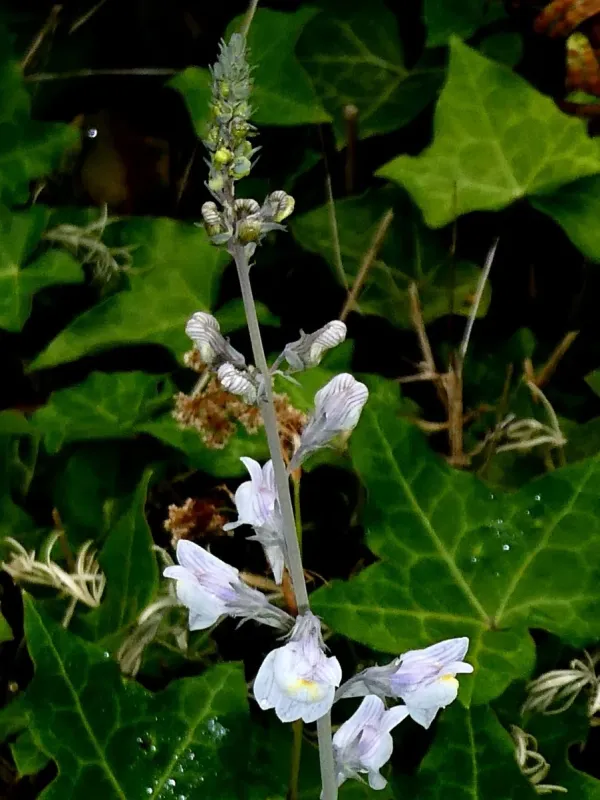
Morphologically, the plant displays slender, glaucous leaves and spikes of small, attractive flowers. These blooms are typically white or pale lavender with dark violet veins, and they serve as an important nectar source for various pollinators throughout the flowering season.
In agricultural practice, pale toadflax is often regarded as a persistent weed due to its vegetative propagation capabilities. However, its ability to stabilize soil makes it useful in ecological restoration projects aimed at controlling erosion on steep or unstable embankments.
Main diseases and pests
Linaria repens is generally robust, but it can be susceptible to powdery mildew during humid, stagnant air conditions. This fungal growth may cover the foliage, reducing photosynthetic efficiency, although it rarely kills established colonies of the plant.
Insects such as various species of moths and leaf beetles may feed on the stems and reproductive organs. While these pests can cause localized damage to individual plants, they are rarely significant enough to require intensive chemical control in non-agricultural areas.