
Linaria propinqua
Linaria propinqua
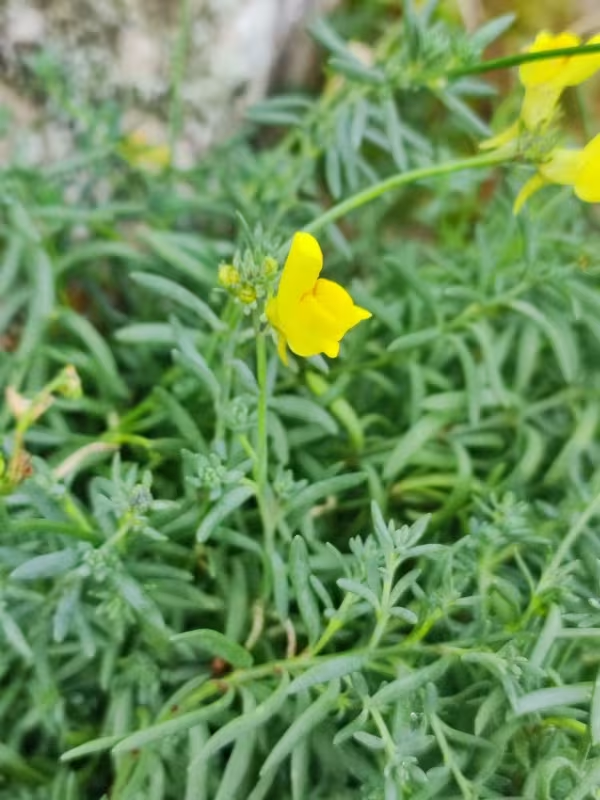
Description
Sowing dates
Linaria propinqua is recognized as a wild herbaceous plant that often appears in agricultural fields, competing with cultivated crops. As it is not a bred agricultural cultivar, its emergence in fields is governed by seasonal temperature changes and moisture levels rather than standardized planting schedules.
The plant possesses a significant capacity for regeneration, allowing it to establish populations throughout the growing season. Seeds typically germinate in early spring, once soil temperatures reach a threshold that stimulates initial vegetative development.
In high-competition environments, Linaria propinqua shows aggressive growth patterns, utilizing available nutrients rapidly. Agronomists must monitor fields closely during the early growth stages to implement effective control strategies before the plants mature.
Its life cycle allows it to adapt to various crop rotation patterns, appearing in both winter and spring cereal fields. This flexibility makes it a challenging species to manage without a structured integrated pest management approach.
Management practices should focus on mechanical intervention at the rosette stage. By disturbing the soil structure during this phase, farmers can effectively limit the plant's ability to establish a deep, resilient root system.
Growing requirements
Belonging to the Plantaginaceae family, Linaria propinqua is a perennial herb that thrives in open, sun-exposed environments. It is well-adapted to typical field margins and fallow lands that characterize diverse agro-ecosystems.
The plant demonstrates remarkable soil plasticity, successfully growing in various textures ranging from sandy to clay-rich soils. While it prefers good drainage, it is capable of surviving in various moisture conditions due to its robust root architecture.
The preferred soil pH for this species falls within the slightly acidic to neutral range. Its deep rooting system allows the plant to access moisture during periods of low precipitation, making it highly resilient to temporary drought stress.
Linaria propinqua is well-suited to temperate climates, exhibiting tolerance to wide fluctuations in day and night temperatures. This resilience is a key factor in its ability to occupy ecological niches across different regional latitudes.
The presence of this species often indicates gaps in soil management or the use of unclean seed stock. Maintaining healthy soil structure and ensuring seed purity are fundamental components of preventing its infestation in commercial crop fields.
Main diseases and pests
As a member of the Plantaginaceae family, Linaria propinqua can act as a reservoir for various pathogens that threaten commercial agriculture. Common issues include susceptibility to fungal infections, such as powdery mildew, which can spread to neighboring crops.
Several pests, including specific types of moth larvae and beetles, can damage the vegetative tissues of the plant. These pests may occasionally transition to cultivated crops, potentially impacting yields if the infestation is not managed correctly.
Chemical control remains the most reliable method for suppressing populations within cereal fields. Selective herbicides applied during the early growth stages are essential for maintaining crop purity and minimizing competition for light and nutrients.
Mechanical operations, such as deep plowing or harrowing, play a critical role in controlling the spread of Linaria propinqua. By mechanically damaging the roots before the plant enters the flowering stage, farmers can effectively prevent further dispersal.
Current integrated pest management strategies emphasize a combination of cultural and chemical methods. Future research into biocontrol agents may provide additional sustainable options for reducing the impact of this species in diverse agricultural settings.