
Peloponnese toadflax
Linaria peloponnesiaca
Description
Growing requirements
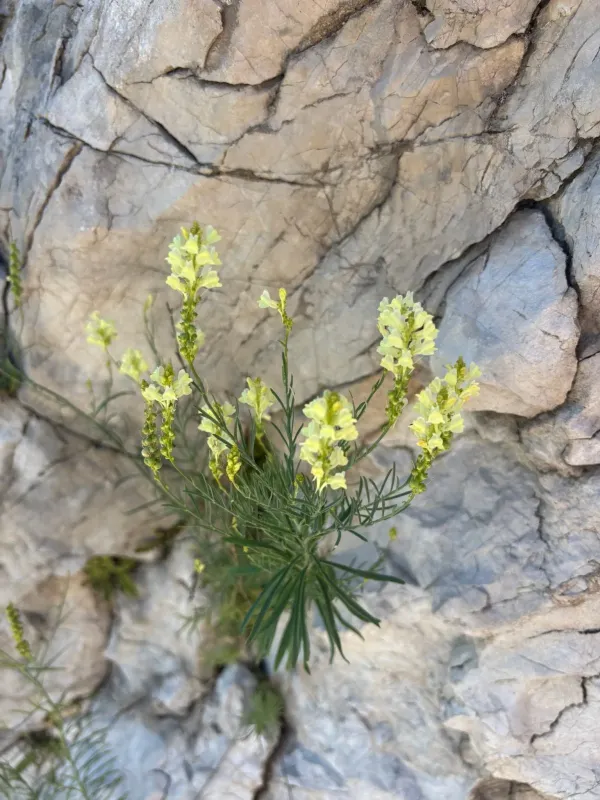
Peloponnese toadflax (Linaria peloponnesiaca) is a perennial herbaceous plant belonging to the Plantaginaceae family. Originally from the mountainous regions of the Balkans, it is known for its ability to thrive in challenging, rocky habitats with minimal soil nutrients.
The plant requires full sun exposure to maintain its compact growth habit and prolific flowering. It is highly valued in horticulture for its exceptional drought tolerance, making it an excellent choice for water-wise landscapes and rock gardens.
For optimal growth, the species demands well-draining soil, ideally sandy or gravelly in texture. Any tendency towards waterlogging or high moisture retention in the root zone must be avoided to prevent fungal infections and root decay, which are the main threats to the plant's health.
Botanically, it displays narrow, linear foliage and distinct, spurred flowers arranged in terminal racemes. Its structure allows it to withstand windy conditions often found in its native mountain habitats, contributing to its hardiness in open garden settings.
The primary use of Linaria peloponnesiaca is ornamental. It is widely used in landscape design for rockeries, dry borders, and xeriscaping projects where low-maintenance, perennial color is desired throughout the active growing season.