
Jersey toadflax
Linaria pelisseriana
Description
Growing requirements
Jersey toadflax (Linaria pelisseriana) is an annual herbaceous plant belonging to the Plantaginaceae family. While not typically classified as a mainstream commodity crop, it remains a plant of significant interest for ecological restoration and specialized botanical cultivation.
The native range of this species is centered around the Mediterranean basin, extending across much of Western and Southern Europe. It is commonly found in dry grasslands, open rocky outcrops, and sandy patches where it thrives in competition with other pioneer vegetation.
Regarding climatic requirements, the plant is well-adapted to Mediterranean climates characterized by mild, wet winters and warm, dry springs. It requires high solar radiation levels to ensure successful germination and subsequent development of its distinctive floral spikes.
The species demonstrates a clear preference for sandy or gravelly soils that offer excellent drainage. It is highly sensitive to waterlogging, so soil aeration and permeability are critical factors for site selection if the plant is being established in specific agricultural or garden settings.
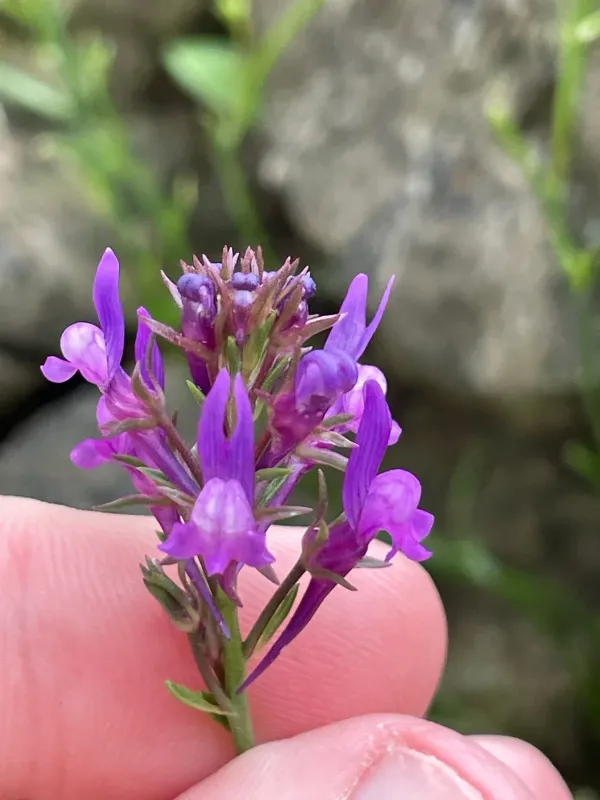
Morphologically, Linaria pelisseriana features slender stems and linear leaves. Its inflorescences are characterized by purple or violet flowers with a spur, showcasing a bright orange throat. The biological cycle is primarily spring-flowering, after which the plant produces small seed capsules.