
Linaria munbyana
Linaria munbyana
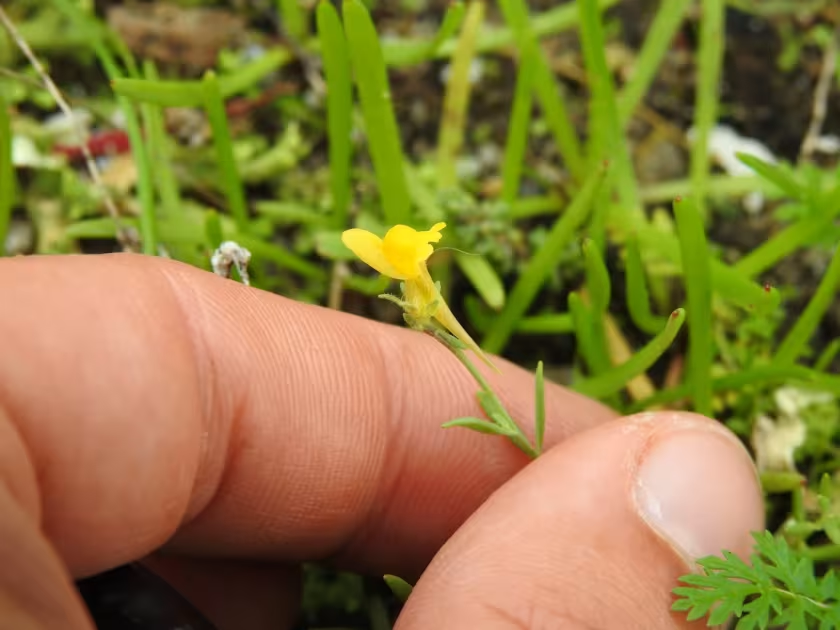
Description
Sowing dates
Linaria munbyana is an annual herbaceous plant belonging to the Plantaginaceae family. In agricultural and horticultural contexts, the seeds are typically sown in early spring, once the soil has warmed sufficiently, generally reaching temperatures above 10 degrees Celsius.
For colder climates, a greenhouse or indoor sowing method is recommended to establish strong seedlings before the last frost. The seeds are very small and should be sown on the surface or lightly covered with a thin layer of soil to ensure proper light exposure for germination.
The spacing between plants is critical for healthy development; a distance of approximately 20–25 cm between rows allows for adequate air circulation and eases weeding processes. Overcrowding can lead to weak stems and a higher susceptibility to humidity-related diseases.
Soil preparation is essential for successful germination; the area must be cleared of perennial weeds and pulverized to ensure a fine tilth. Uniform moisture levels must be maintained during the initial weeks until the seedlings become established in the field.
To enhance uniformity in crop emergence, one may use light row covers or mulching materials, which protect the small seeds from washing away during heavy rains and preserve soil humidity in the upper layers.
Growing requirements
Linaria munbyana is highly demanding in terms of light exposure. It thrives in full sun conditions, which are necessary to maintain its compact growth habit and vibrant flowering patterns. Shaded areas often result in etiolated stems and diminished aesthetic quality.
The ideal soil for this species is a light, well-draining substrate, preferably sandy or loam-based with a neutral to slightly alkaline pH. Heavy, water-retaining clay soils should be amended with organic matter or sand to improve drainage and prevent root suffocation.
Watering management is a delicate balance; while the plant exhibits moderate drought tolerance once mature, regular moisture is required during the active vegetative stage. Excessive water stagnation is the most common cause of crop failure in this species.
The plant performs best under temperate climate conditions. It is not well-adapted to extreme humidity combined with high heat, which can promote physiological stress and increase the vulnerability of the plant to secondary infections.
Nutrient management focuses on balanced fertilization. High levels of nitrogen should be avoided as they lead to excessive foliage development, which can compromise the structural integrity of the plant and suppress the intensity of its floral display.
Main diseases and pests
Aphids are the most common pests affecting Linaria munbyana. These insects colonize the succulent tips and flower stalks, causing damage through sap depletion. Systemic insecticides or neem oil-based sprays are effective in managing initial infestations.
Powdery mildew represents a significant fungal threat, particularly in dense plantings where airflow is restricted. To manage this, maintaining optimal plant spacing and ensuring the foliage remains as dry as possible are key preventive cultural practices.
Root rot diseases occur primarily in poorly drained soil conditions. If the soil remains saturated for long periods, the roots become prone to rot, which necessitates improving the field's grading and incorporating drainage channels if necessary.
Leaf spot infections may appear during prolonged rainy periods. Management involves the prompt removal and destruction of infected plant debris to limit the inoculum load in the field, along with the application of appropriate copper-based fungicides if required.
Preventive care through crop rotation is highly advised. Avoiding the planting of Linaria in the same plot as other susceptible plant species helps break the lifecycle of specific soil-borne pathogens that target the Plantaginaceae family.