
Small-flowered toadflax
Linaria micrantha
Description
Growing requirements
Small-flowered toadflax (Linaria micrantha) is an annual herbaceous plant belonging to the Plantaginaceae family. It is native to the Mediterranean basin and is widely distributed across Southern Europe, North Africa, and Western Asia.
The plant is typically found in open, sandy habitats, rocky outcrops, and disturbed agricultural lands. It thrives in well-drained soils and is highly adapted to low-moisture environments, making it a pioneer species in arid regions.
Morphologically, the plant is quite small, usually ranging from 5 to 20 cm in height. Its thin stems and linear leaves are evolutionary adaptations designed to minimize water loss through transpiration, allowing the plant to flourish in sun-exposed areas.
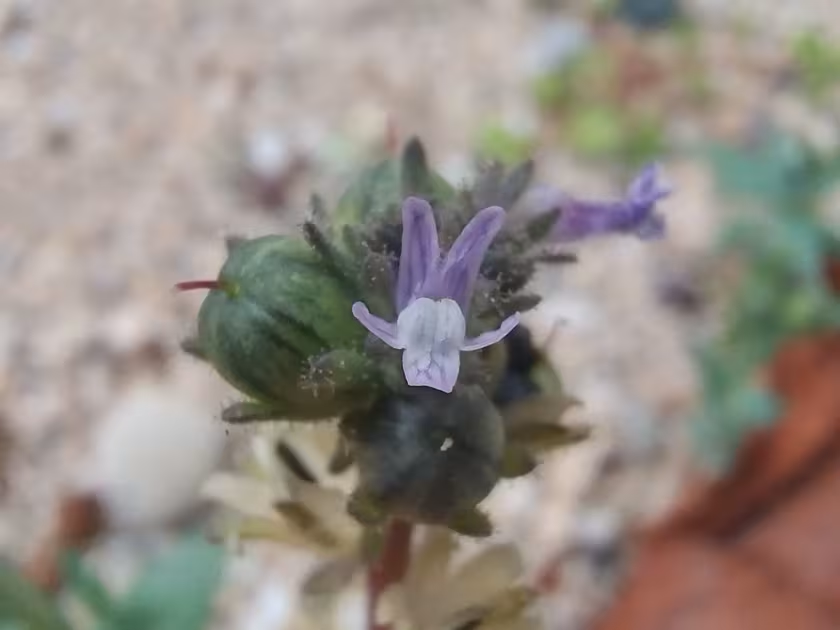
The flowers are small, characterized by the typical spurred corolla of the genus Linaria. The plant completes its life cycle relatively quickly, often setting seeds before the peak of the dry summer season, which is a key survival strategy.
From an agricultural standpoint, it acts as a weed that colonizes sparse crops. Its ability to tolerate nutrient-poor soils allows it to establish itself in areas where other more demanding plants may struggle to survive.
Main diseases and pests
Linaria micrantha is generally resilient to most common crop diseases. It does not typically suffer from significant economic damage by pests, though it may act as an alternative host for certain polyphagous insects found in natural meadows.
The primary threat this plant poses is its potential for rapid spread in sandy agricultural soils. Once established, the large seed bank can persist in the soil for several years, creating a recurring management challenge for farmers.
Mechanical control is considered the most effective strategy. Shallow cultivation and hoeing before the plants reach the flowering stage prevent the replenishment of the seed bank, which is essential for long-term population suppression.
Crop rotation serves as a critical tool in managing the spread of small-flowered toadflax. Introducing competitive crops that create a dense canopy will shade the soil surface, effectively suppressing the germination and growth of this light-loving plant.
While chemical control using selective herbicides is possible in some cropping systems, the plant's morphological resilience and small size necessitate careful timing of applications to ensure maximum efficiency during the early development stages.