
Bubani toadflax
Linaria bubanii
Description
Growing requirements
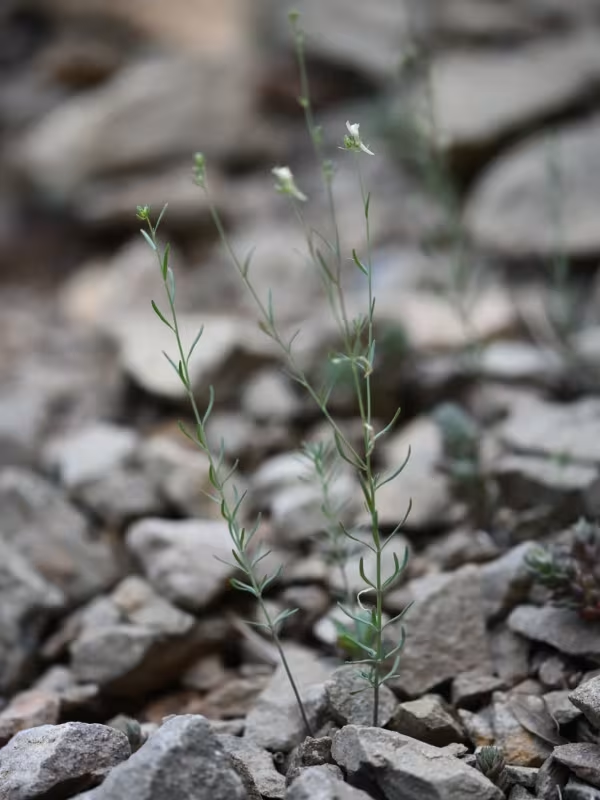
Bubani toadflax (Linaria bubanii) is a perennial herbaceous plant belonging to the Plantaginaceae family. It is native to the Pyrenees, typically found in high-altitude rocky environments.
The plant thrives in well-drained, nutrient-poor, rocky, or sandy soils. Soil aeration is essential for the healthy development of its root system, as it is susceptible to root decay in heavy, compacted clays.
It requires full sun exposure to maintain its compact growth habit and produce abundant blooms. It is naturally adapted to survive periods of drought, making it suitable for low-maintenance landscaping projects.
Climatic requirements involve cool to moderate temperatures. It is hardy in its native alpine regions, being able to withstand significant temperature fluctuations between day and night.
In terms of agricultural and horticultural use, it is primarily valued as a decorative plant in rock gardens or xeriscapes, contributing to biodiversity and ornamental ground coverage.
Main diseases and pests
The most common disease affecting this species is powdery mildew, which manifests as a white fungal growth on the leaves, especially when air circulation is poor.
Root rot is a major threat in soils with poor drainage. Once the root system is compromised by excessive moisture, the plant's ability to absorb nutrients is severely hampered.
Pests such as aphids can occasionally infest the flower spikes and young foliage, causing stunted growth. Early intervention is necessary to prevent these pests from spreading.
Caterpillars may feed on the foliage during the active growth phase, requiring manual removal or the application of safe, targeted biological control agents if the infestation is heavy.
Effective management includes maintaining an open planting space to ensure good airflow and preventing the encroachment of more aggressive plant species that might shadow the toadflax.