
Hesse's leopard plant
Ligularia xhessei (Hesse) Bergmans
Description
Growing requirements
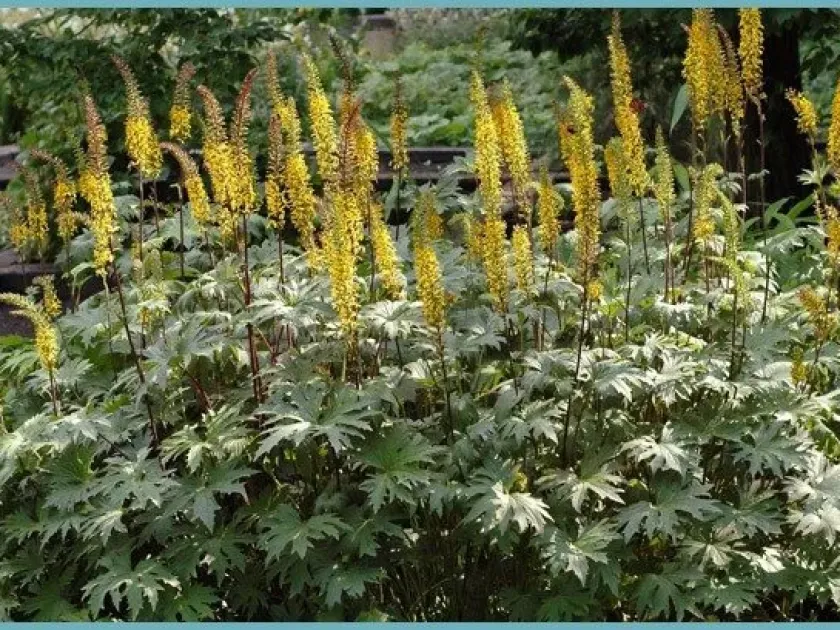
Hesse's leopard plant (Ligularia × hessei) is a robust perennial belonging to the Asteraceae family. Known for its structural presence, this hybrid cultivar produces large, heart-shaped leaves and impressive flower spikes that stand out in any garden environment.
The plant thrives in moist, fertile, and nutrient-rich soils with a neutral or slightly acidic pH. It performs best in partial shade, making it a perfect candidate for woodland gardens, north-facing borders, or the margins of ponds and water features where humidity is naturally higher.
A consistent moisture supply is the most critical aspect of its cultivation. During hot summer spells, the plant requires regular deep watering to prevent leaf wilting. Mulching the base of the plant is highly recommended to retain soil moisture and keep the root system cool.
This species is well-suited for temperate climates and exhibits significant winter hardiness. Once established, Hesse's leopard plant is a long-lived perennial that requires minimal maintenance, as it forms a dense clump that naturally suppresses weed growth around its base.
In landscaping, this plant is used primarily as a dramatic focal point or a backdrop for smaller shade-loving perennials. Its architectural foliage provides color and texture throughout the growing season, even before the vibrant yellow flower spikes appear.
Main diseases and pests
Slugs and snails are the most common pests for Ligularia × hessei, as they are attracted to the tender, large leaves. Implementing integrated pest management strategies, such as physical barriers or organic bait traps, is essential during wet springs to protect the foliage.
While relatively disease-resistant, the plant can suffer from powdery mildew or root rot if grown in stagnant water or areas with poor air circulation. Proper site selection and avoiding overhead watering in the evenings can significantly reduce the risk of these pathological issues.