
Ligularia fischeri
Ligularia fischeri (Ledeb.) Turcz. x Ligularia stenocephala (Maxim.) Matsum. & Koidz.
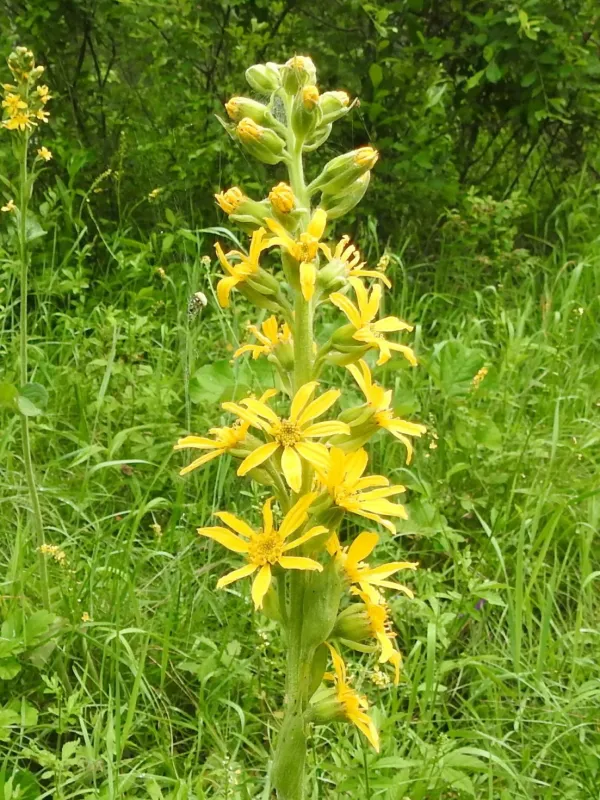
Description
Sowing dates
Ligularia fischeri is a perennial herb belonging to the Asteraceae family. Propagation is primarily done via seeds, which require stratification to break dormancy before germination can occur effectively.
Seeds should be sown in early spring into well-prepared seedbeds. A sowing depth of 1-2 centimeters is recommended to ensure optimal moisture levels and protection from dehydration while allowing sufficient light for germination.
Greenhouse sowing is a common agricultural practice to ensure higher survival rates for young seedlings. Once the plants reach a size of 4-5 true leaves, they are hardened off and transplanted to their permanent location.
Spacing is a critical factor for long-term health, as the plants develop large, broad leaves. Planting at intervals of 50-70 centimeters allows for adequate airflow and minimizes the risk of competition between individuals.
Vegetative propagation via root division is also viable and often preferred in commercial settings to ensure genetic consistency and faster establishment of mature plants.
Growing requirements
This crop thrives in environments with high humidity and cool to moderate temperatures. It is naturally suited to riparian zones or areas with consistently moist, well-draining soil.
Rich, humus-heavy loamy soils are ideal for maximum development. The plant prefers neutral to slightly acidic pH levels, making it highly compatible with standard forest or meadow soil profiles.
The plant is categorized as shade-tolerant, making it an excellent candidate for intercropping in agroforestry systems or gardening in shaded areas where direct sunlight would cause foliage scorched.
Adequate water supply is the most important factor for success. During dry spells, irrigation is necessary, as the large leaves have a high transpiration rate that can quickly deplete moisture reserves.
Fertilization with organic matter, such as compost or well-rotted manure, provides the necessary nutrients for vigorous growth during the primary vegetation season.
Yield
Ligularia fischeri is widely valued for its medicinal properties, specifically the bioactive compounds stored in its roots and rhizomes. Commercial harvesting is typically planned for the third year of growth.
The yield of raw material is maximized when the plant is grown in deep, fertile soils that facilitate robust root development. Once harvested, the roots are cleaned and dried to preserve chemical stability.
In addition to medicinal uses, the foliage serves as a source of forage in certain regions. Its high biomass production makes it an interesting subject for studies in alternative agricultural feed sources.
The reproductive yield, in terms of seed production, is generally high, allowing for efficient scale-up of production areas. Proper management ensures consistent harvest cycles.
Economic viability is supported by the plant's long-lived nature, providing multiple years of potential harvest from a single establishment without requiring intensive replanting procedures.
Main diseases and pests
Gastropods, particularly slugs and snails, are the primary pests of this species. They target the succulent new growth and can severely damage young plantations if not managed appropriately.
Fungal diseases, such as powdery mildew, may occur during periods of high humidity and poor ventilation. Cultural controls, such as thinning the canopy, are usually more effective than chemical intervention.
Root rot, resulting from poor drainage or waterlogging, is a major threat to crop survival. Ensuring that the site has a natural or artificial drainage system is essential for plant health.
Aphid infestations may occur on tender shoots and flower stalks. Integrated pest management strategies, such as introducing beneficial insects, are encouraged to maintain a healthy ecosystem.
Winter damage to crowns is rare due to the plant's natural cold hardiness, but in extreme cases, a protective layer of mulch can prevent soil heaving and physical damage during freeze-thaw cycles.