
Ligularia przewalskii
Ligularia przewalskii (Maxim.) Diels
Description
Growing requirements
Ligularia przewalskii, commonly known as Przewalski's golden ray, is a perennial herbaceous plant belonging to the Asteraceae family. Its native range encompasses the humid regions of East Asia, where it typically colonizes moist riverbanks and shaded meadow areas.
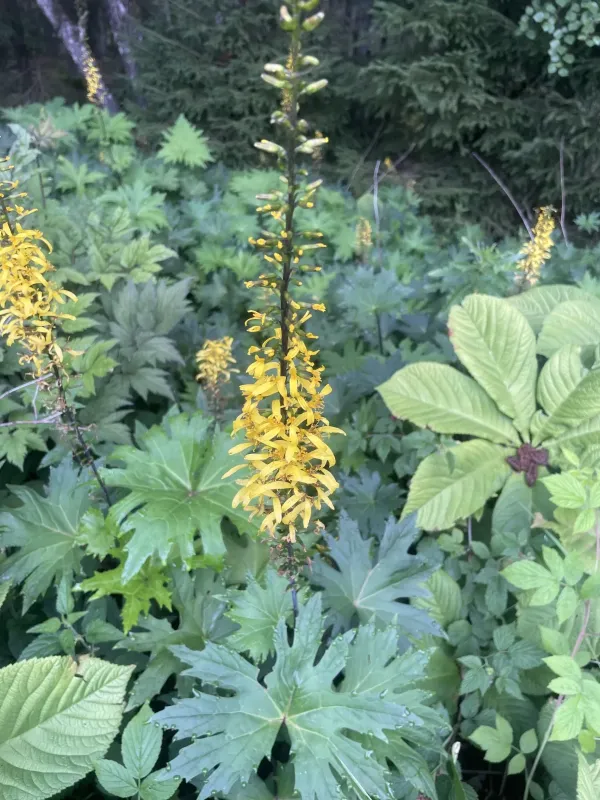
Botanically, the plant is distinguished by its deeply incised, palm-shaped leaves forming a robust basal rosette. During the summer, it produces long, slender racemes of bright yellow flowers that rise significantly above the foliage, creating a dramatic architectural effect.
Cultivation requires semi-shaded sites protected from intense midday sunlight to prevent leaf scorch. The species thrives in cool environments and is highly dependent on consistent moisture levels, making it unsuitable for dry or arid landscape sections.
The ideal growing medium is nutrient-rich, moisture-retentive loam with a neutral to slightly acidic pH. Incorporating organic matter during soil preparation is essential to sustain the high growth rate and maintain the vivid green color of the leaves throughout the season.
In landscaping, this crop is primarily used for its ornamental value in shade gardens, near pond edges, or as a structural element in borders. Its ability to tolerate wet soils makes it an excellent choice for poorly drained parts of the garden.
Main diseases and pests
Slugs and snails are the most frequent pests affecting Ligularia przewalskii, especially during periods of high humidity. They can cause significant damage to the foliage, necessitating the use of traps or organic barriers to protect the younger plants.
Powdery mildew represents the most common fungal disease, which develops in conditions of poor air circulation and high humidity. Regular thinning of the foliage and ensuring adequate space between plants are the best preventive measures against this pathogen.
Root rot may occur if the soil remains waterlogged without sufficient drainage. Although the plant loves moisture, it requires a well-aerated soil structure to prevent the accumulation of stagnant water around the root zone, which leads to decay.
Leaf-chewing insects can occasionally infest the plant, though they rarely cause fatal damage if the plant is kept vigorous through proper fertilization and watering schedules. Monitoring early in the season is recommended to detect any pest pressure.
Integrated pest management strategies should focus on maintaining overall plant health to boost natural resistance. Clearing debris from the planting area in autumn helps eliminate overwintering sites for both slugs and fungal spores.