
Narrow-headed leopard plant
Ligularia stenocephala (Maxim.) Matsum. et Koidz.
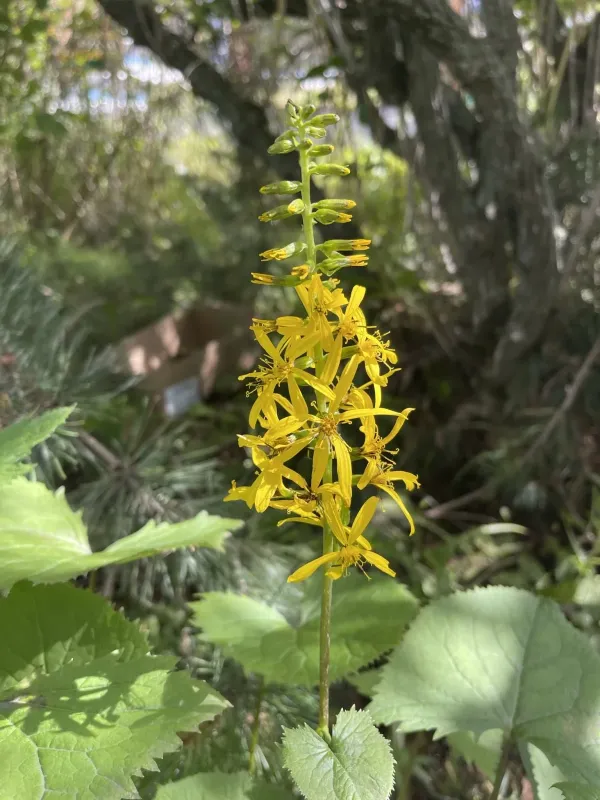
Description
Sowing dates
The propagation of Ligularia stenocephala is most efficiently performed by dividing the rootstock, which is best done during early spring or autumn.
Direct seeding in the garden is recommended to be done before winter, as seeds require a period of cold stratification to germinate properly.
When starting from seeds indoors, sow them in trays in March, keeping them in a cool and well-lit environment until the seedlings emerge.
Pricking out the seedlings should occur when they develop two true leaves, moving them into individual pots to grow until they are ready for planting.
Transplanting into the permanent garden site should be done with sufficient spacing, approximately 60 centimeters, to accommodate the mature plant size.
Growing requirements
The Narrow-headed leopard plant belongs to the Asteraceae family and thrives in cool, shady locations with consistently moist and fertile soil.
It performs exceptionally well in heavy, rich soils that are high in organic matter, making it a perfect candidate for waterside planting.
The species is extremely sensitive to heat and direct sunlight, which can lead to rapid wilting and scorching of the large, heart-shaped foliage.
Agricultural management requires regular irrigation, especially during dry spells, to maintain the high soil moisture levels the plant demands.
Applying a layer of organic mulch around the base of the plant helps to conserve soil moisture and suppresses weeds during the growing season.
Main diseases and pests
Slugs and snails are the most significant pests for this species, often causing extensive damage to the lush leaves during damp weather conditions.
Effective management includes using copper barriers or granular molluscicides spread around the plants to prevent pest access to the foliage.
Powdery mildew can occasionally appear if the plants are situated in areas with poor airflow and high humidity during the late summer months.
Regular inspection of the foliage is necessary to identify early signs of fungal spotting, allowing for the quick removal of affected plant parts.
Promoting good air circulation by avoiding overcrowding is the most reliable cultural method to minimize the risk of recurring plant diseases.
Harvesting
Seed collection is undertaken in late autumn once the flower spikes have dried out and the seeds have turned dark and firm in their husks.
Removing the spent flower stems after the main bloom period redirects the plant's energy toward root development for the following spring.
The foliage should be cut back to the ground level in late autumn after the first frost, leaving only a few centimeters of stem above the soil.
For vegetative propagation, the clumps are lifted and divided with a sharp spade, ensuring each division contains healthy buds and roots.
Collected garden debris, including leaves and stems, can be composted provided the plants were not suffering from significant fungal infections.