
Licuala triphylla
Licuala triphylla
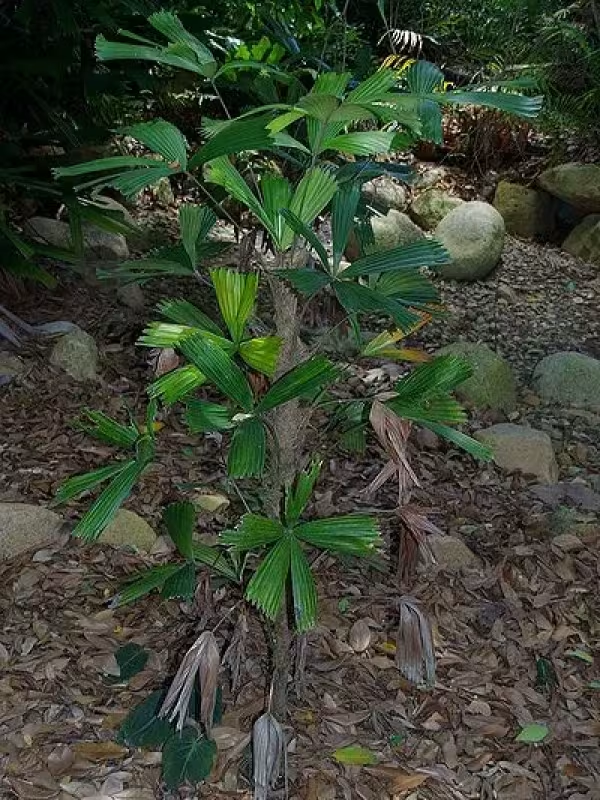
Description
Growing requirements
Licuala triphylla belongs to the Arecaceae family. This dwarf palm is native to the tropical rainforests of Southeast Asia, specifically found in the understory layers of Malaysia.
The plant thrives in a humid tropical environment. It requires high air humidity and constant, warm temperatures, making it sensitive to cold air and drafts typical in temperate climates.
For cultivation, a well-draining and nutrient-rich soil mix is essential. The substrate should be kept consistently moist but never waterlogged, as the roots are highly prone to rot.
Light requirements for this species include bright, indirect lighting. Direct sunlight will easily scorch the palm's unique fan-shaped leaves, so placing it away from intense southern exposure is recommended.
Its primary agricultural and horticultural value lies in its decorative use. It is highly sought after by collectors of exotic indoor plants for its compact habit and distinctive tripartite leaf structure.
Main diseases and pests
Spider mites are a common pest for Licuala triphylla, especially in indoor environments where air humidity is not sufficiently maintained. They typically inhabit the undersides of the leaves.
Mealybugs can also infest the plant, clustering around the base of the stems. If left untreated, they can cause significant stress to the palm and lead to severe growth stagnation.
Root rot is the most serious threat caused by improper watering techniques. A lack of proper drainage leads to fungal colonization of the root system, which is often fatal to the plant.
Leaf spot diseases can occur due to poor air circulation and excessive dampness on the foliage. It is important to avoid wetting the leaves excessively during the evening hours.
Regular maintenance, including careful inspection of the leaves and maintaining a clean growing area, is crucial to prevent the spread of diseases and pests throughout the collection.