
Licuala cabalionii
Licuala cabalionii
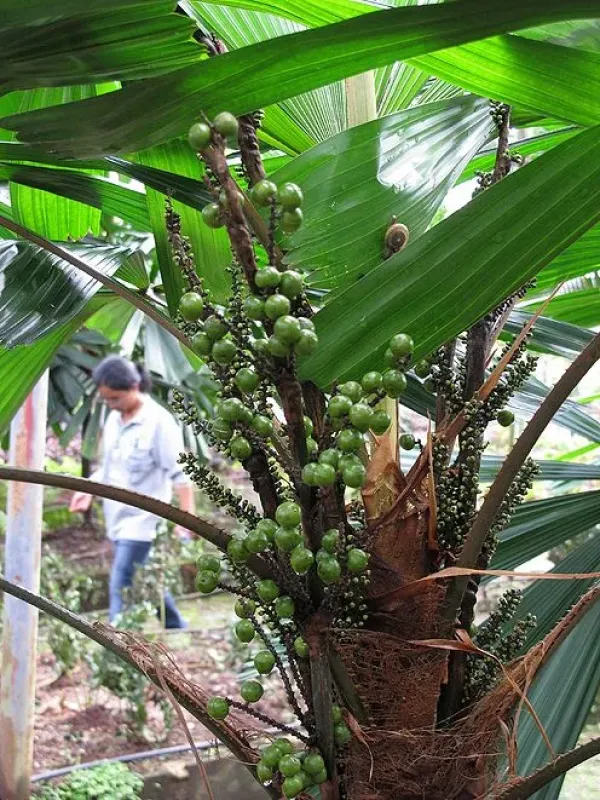
Description
Growing requirements
Licuala cabalionii is a striking species within the Arecaceae family, native to the tropical forests of Vanuatu. This palm is highly regarded for its aesthetic appeal, characterized by its unique, fan-shaped leaves that make it a centerpiece in botanical collections.
To thrive, this plant requires a consistent tropical environment. Temperatures should ideally range between 20°C and 28°C throughout the year, as the plant is highly sensitive to cold stress and frost, which can be fatal.
Humidity is perhaps the most critical factor in the plant's success. It requires a humid environment, ideally above 70%, mimicking the natural conditions of the Vanuatu rainforests. Regular misting or the use of humidifiers is essential for indoor growth.
The soil must be well-draining yet moisture-retentive. A mix of organic matter, peat-based compost, and coarse sand provides the necessary aeration and nutrient profile required for the root system to develop healthily.
Lighting should be bright but filtered. Direct sunlight should be avoided to prevent scorching the delicate foliage. Ideally, place the plant in a spot that receives soft, indirect light for the majority of the day to ensure optimal photosynthesis.
Main diseases and pests
The primary threat to Licuala cabalionii is root rot, which typically stems from poor drainage or overwatering the substrate.
Spider mites are a common pest problem, especially in environments where air circulation is poor and humidity levels drop significantly.
Scale insects can attach themselves to the stems and leaf undersides, extracting sap and weakening the plant structure over time.
Fungal leaf spots can occur when water is allowed to sit on the leaves or if the surrounding environment is persistently stagnant.
Effective management includes regular cleaning of the leaves and timely application of horticultural soap or neem oil if infestations occur.