
Licuala cordata
Licuala cordata
Description
Growing requirements
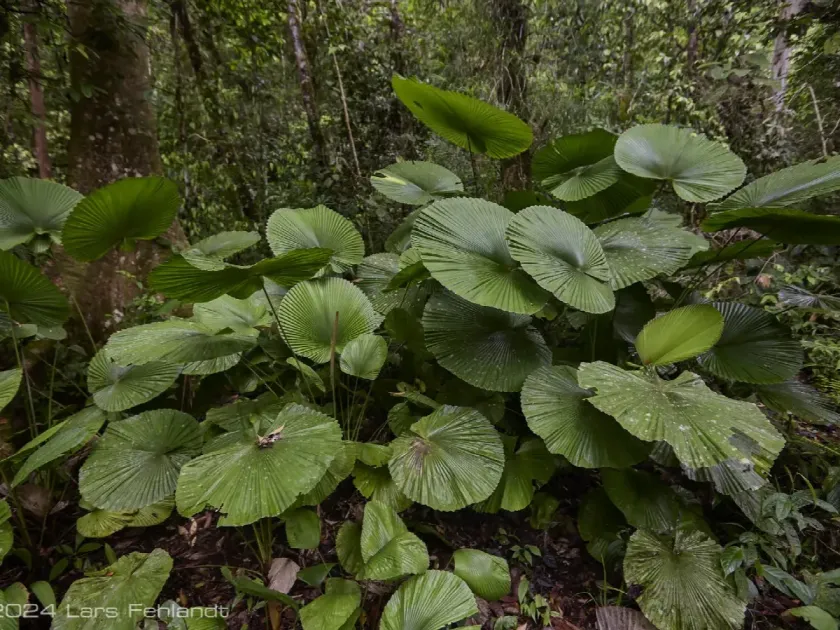
Licuala cordata is a rare and highly sought-after fan palm belonging to the Arecaceae family. Native to the tropical rainforests of Borneo, it is characterized by its compact habit and stunning, almost perfectly circular leaf blades that resemble pleated fans.
In terms of environmental requirements, this species thrives in tropical conditions with consistent warmth. The ideal temperature range for this palm is between 22°C and 28°C throughout the year, with protection from cold drafts or sudden temperature shifts.
Soil composition must be rich in organic matter while ensuring excellent drainage to prevent root asphyxiation. A peat-based mix incorporating bark, perlite, and charcoal provides the ideal structure for healthy root development in container environments.
Light management is crucial, as this plant is adapted to the deep shade of the forest floor. It requires bright, indirect light to maintain its deep green coloration and compact growth; direct sun will almost certainly scorch the fragile leaves.
Watering should be consistent to keep the medium slightly moist but never waterlogged. Since Licuala cordata is sensitive to mineral buildup, the use of rainwater or distilled water is strongly recommended for irrigation.
Main diseases and pests
Root rot is the most common physiological disorder, usually triggered by excessive irrigation or a heavy, compacted substrate. Once the rot sets in, recovery is difficult, making prevention through drainage control the primary management strategy.
Spider mites represent the main pest threat, particularly in dry indoor environments where humidity levels are insufficient. These pests can be managed by increasing ambient moisture and using specialized horticultural oils.
Scale insects often hide along the petioles, where they are difficult to reach with standard surface treatments. Manual removal with a cotton swab dipped in neem oil is a recommended method for localized infestations.
Fungal leaf spots can occur if water remains on the foliage for extended periods in low-ventilation areas. It is important to ensure air circulation around the palm to reduce the risk of pathogen colonization on the leaves.
Nutrient deficiencies, specifically magnesium or potassium, can manifest as chlorosis on older leaves. Regular application of a slow-release, palm-specific fertilizer is necessary to ensure optimal foliage health and vigor.