
Licuala grandis
Licuala grandis
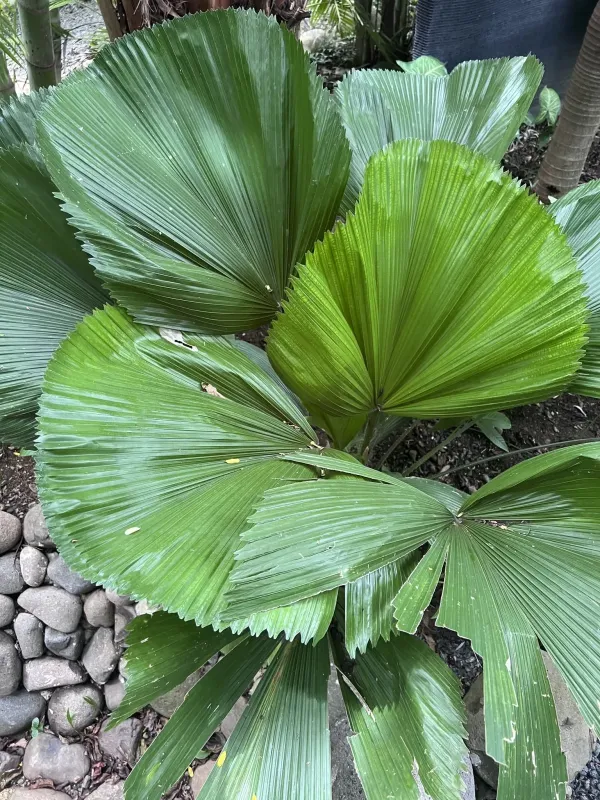
Description
Growing requirements
Licuala grandis, commonly known as the Ruffled fan palm, is a member of the Arecaceae family. Originating from the tropical rainforests of Vanuatu, this plant thrives in warm, humid environments that mimic its native habitat.
The culture requires consistently high temperatures between 20°C and 28°C. Protecting the plant from cold drafts and sudden thermal shocks is essential for preventing leaf browning and growth inhibition.
High relative humidity is vital for the development of its signature pleated, circular leaves. In indoor settings, maintaining humidity above 60% is recommended through frequent misting or automated humidifiers.
A well-draining potting medium is crucial for root health. A blend of peat, perlite, and coarse sand provides the necessary aeration and moisture retention that this species demands during its active growth phase.
Bright, indirect light is ideal for Licuala grandis. While it can tolerate lower light conditions, direct sunlight should be strictly avoided to prevent foliage scorching, which permanently damages the leaf texture.
Main diseases and pests
Spider mites represent a major threat, particularly in environments with low air humidity. These tiny pests settle on the undersides of the leaves, causing discoloration and visible webs if left untreated.
Scale insects are frequent invaders that attach themselves to the stems and leaf bases. These pests drain sap, leading to stunted growth and the potential for secondary fungal infections in the damaged areas.
Root rot is the most common physiological disorder caused by overwatering or poor drainage. Once the roots are compromised, the entire plant structure quickly loses its vitality and succumbs to decay.
Leaf spot pathogens can spread during periods of poor ventilation or high stagnant humidity. These fungal issues typically appear as dark patches, necessitating the immediate removal of affected foliage.
Effective pest management involves integrated control methods, including regular biological inspections, cleaning leaf surfaces, and the judicious use of neem oil or compatible systemic insecticides.