
Dotted blazing star
Liatris punctata
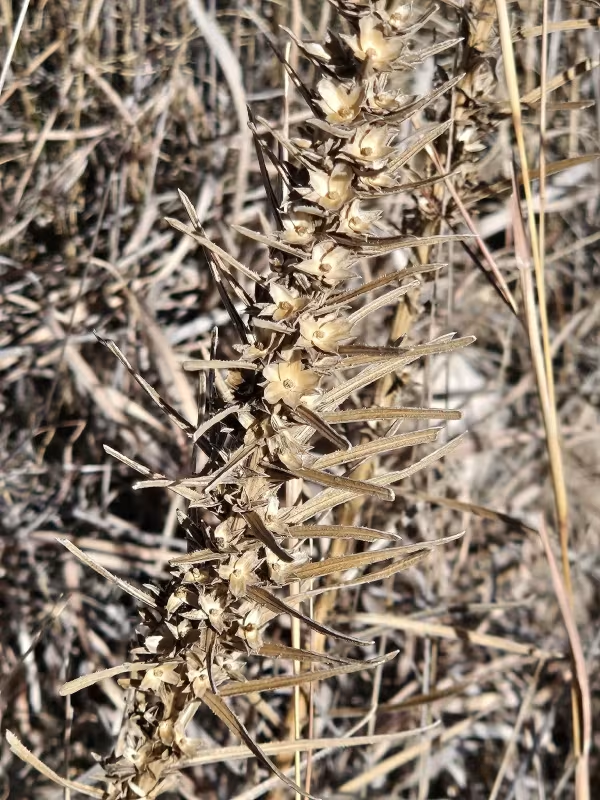
Description
Sowing dates
Dotted blazing star (Liatris punctata) is a perennial herbaceous plant belonging to the Asteraceae family, well-known for its deep taproot and resilience.
In agricultural practice, seeds are ideally sown in late autumn to benefit from natural winter stratification, which is essential for uniform germination.
Spring planting requires artificial stratification: keeping the seeds in a moist medium at temperatures between 1 and 5 degrees Celsius for at least eight weeks.
The seeds should be sown shallowly, just beneath the soil surface, as they require a certain amount of light and have small energy reserves for emergence.
Successful establishment depends on maintaining a weed-free seedbed, as the seedlings are initially slow to grow and can be easily outcompeted.
Growing requirements
Native to the Great Plains of North America, this species is exceptionally adapted to arid climates, high heat, and intense sunlight.
The plant thrives in full sun exposure; it is intolerant of shade, which causes weak stems and reduced flower production.
Well-drained, sandy, or rocky soils are required to prevent crown and root rot, which are the most common causes of failure in non-native habitats.
It is a highly drought-tolerant species, thanks to a robust taproot that can penetrate several feet into the soil profile to access subsurface moisture.
While tolerant of low-fertility soils, the plant benefits from a well-balanced, low-nitrogen fertilization program to maintain overall vigor.
Main diseases and pests
Root rot caused by poorly drained soils or excessive winter moisture is the most significant threat to the health of the plant.
Powdery mildew may occur in stagnant, humid environments with poor air circulation, requiring appropriate fungicide applications.
Soil-borne insects and larvae, such as white grubs, can feed on the deep taproots, potentially weakening or killing established plants.
Aphid infestations can occur during peak summer months, especially during prolonged droughts when the plant's natural defenses are strained.
Proper site selection and spacing are critical to minimize disease pressure and ensure the long-term sustainability of the planting.